<Wraps>
Solo exhibition by Shuhei Fukushima.
2026.04.04 - 2026.04.25
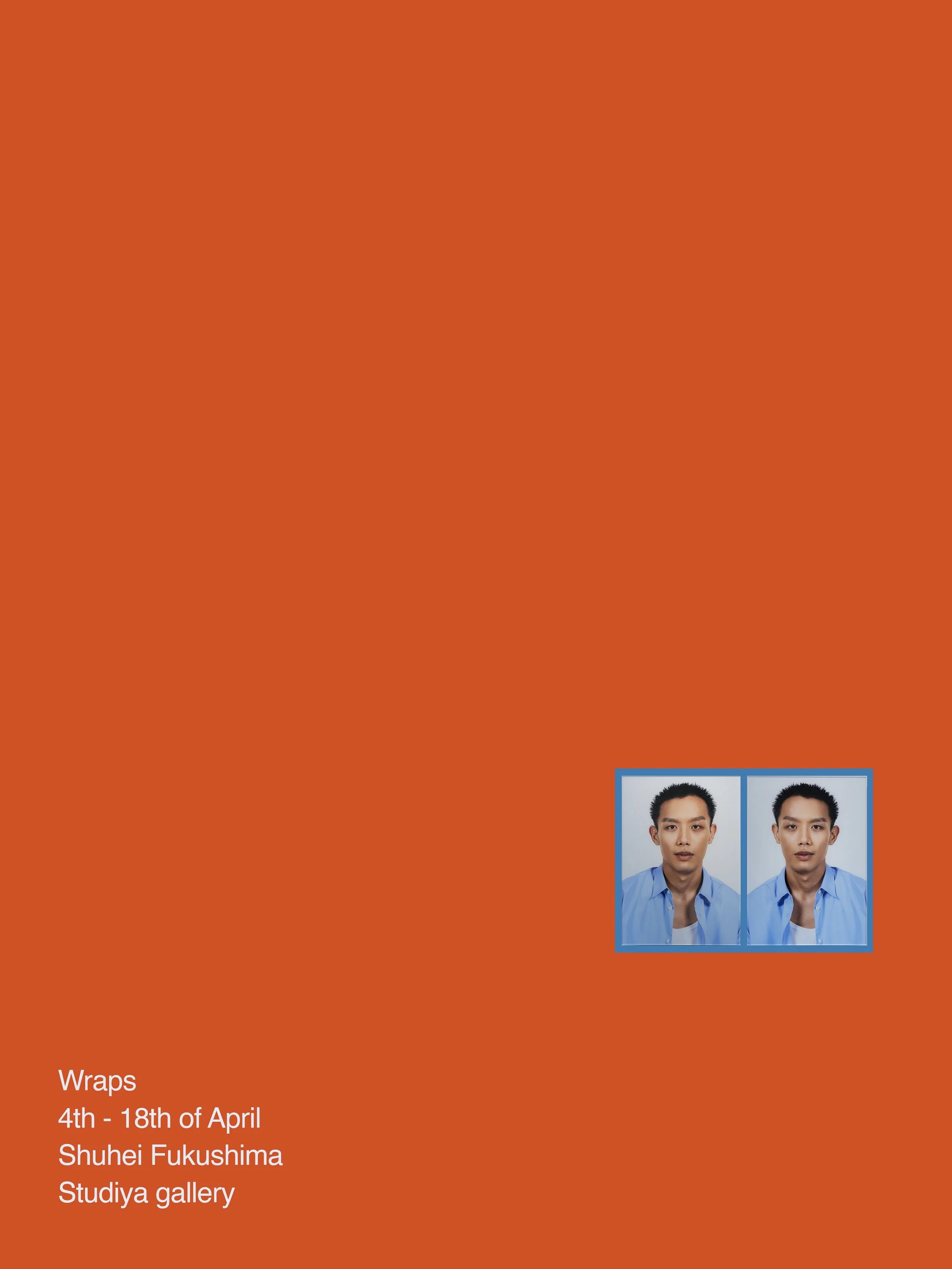
Familiar things are easily passed by.
Yet once covered, they no longer appear as they did before.
Shuhei Fukushima’s practice begins with objects dispersed throughout everyday life—blue tarps, furniture, mirrors. His approach, however, is not oriented toward their representation, but toward reconfiguring the conditions under which they are perceived. Objects are divested of their functional roles and persist instead as surfaces, structures, and states of deferred recognition. In this process, the “individual” does not appear as a fixed identity, but as a mode of existence reconstituted through shifting relations of perception and distance.
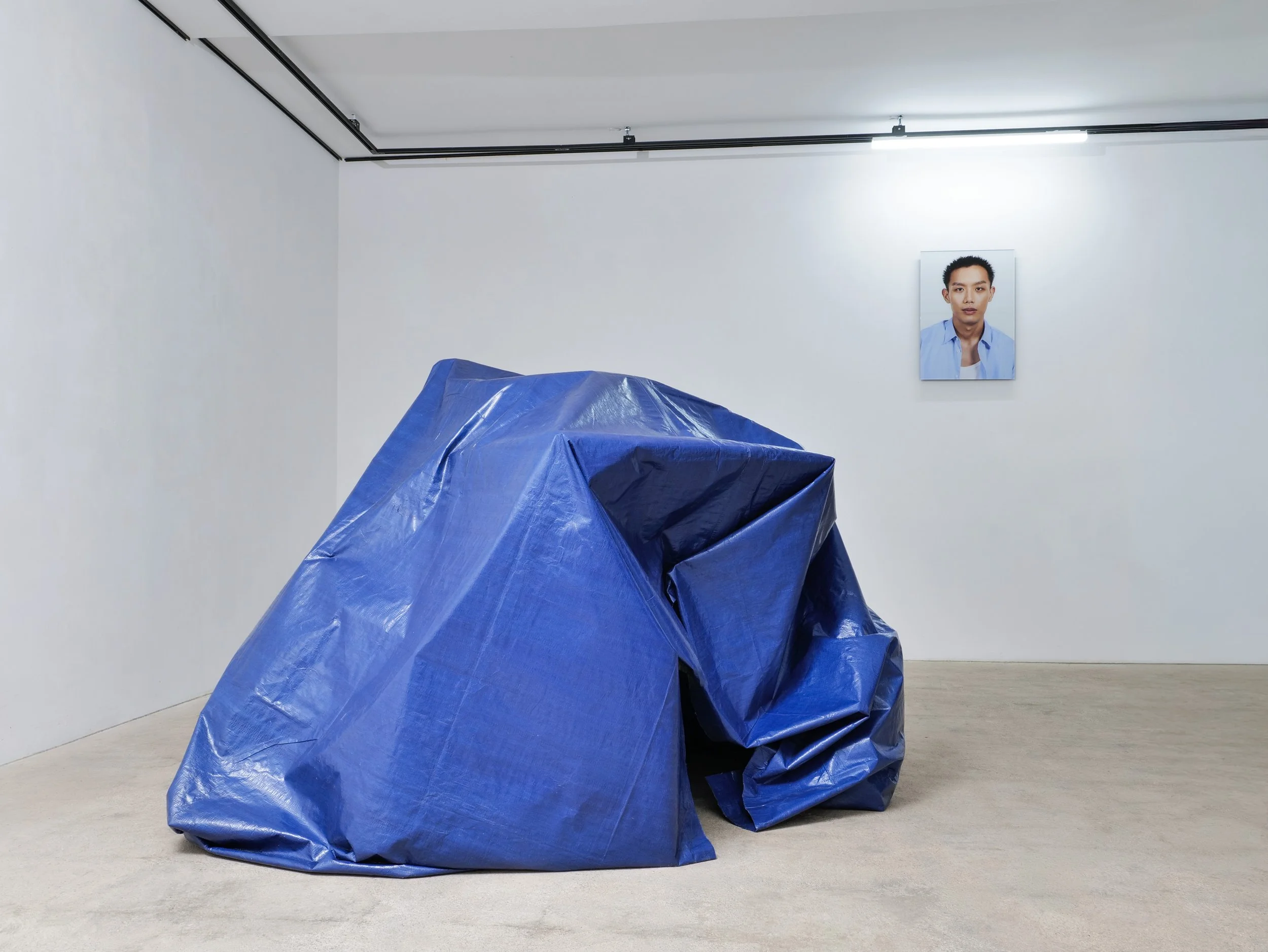
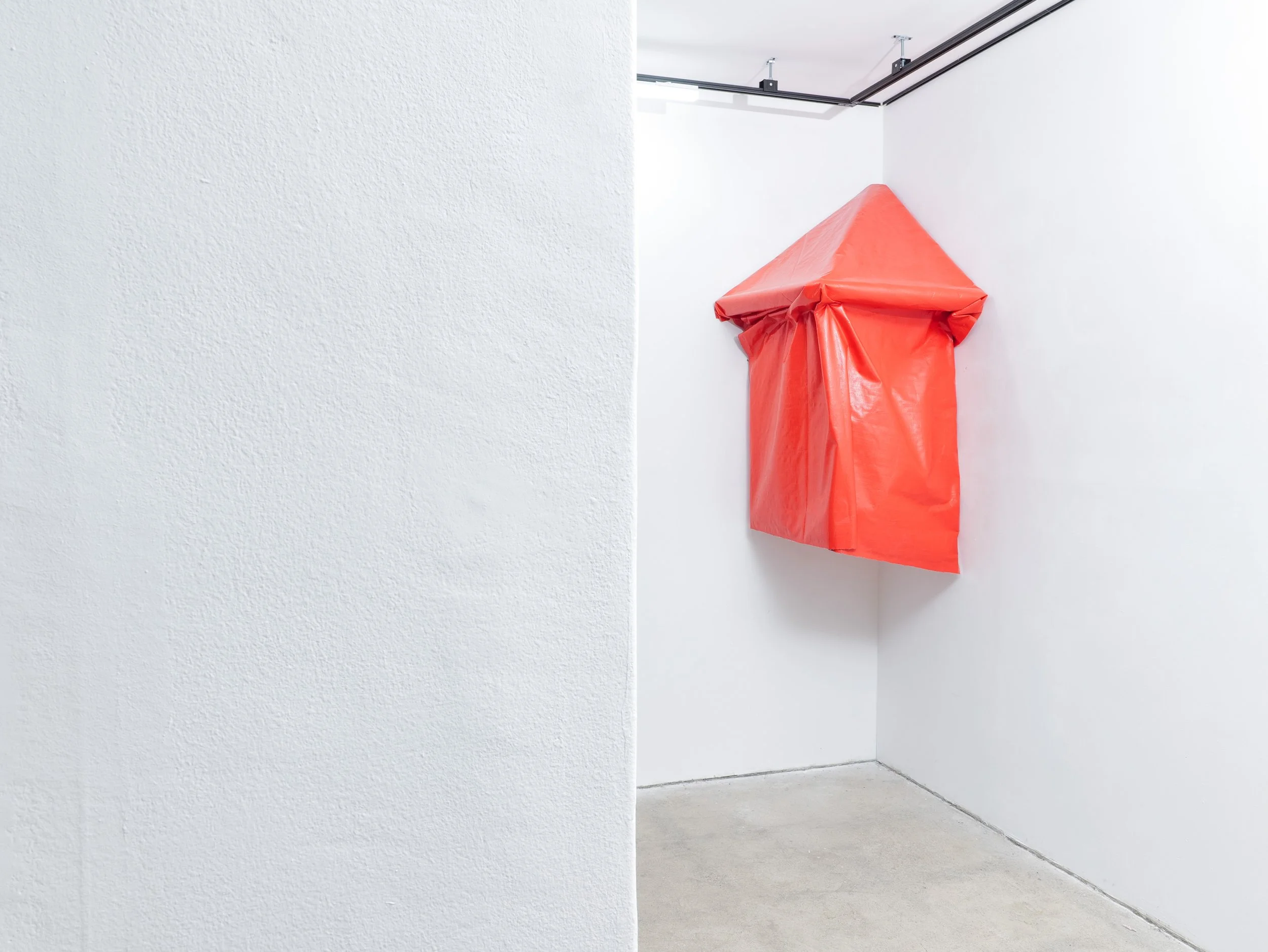
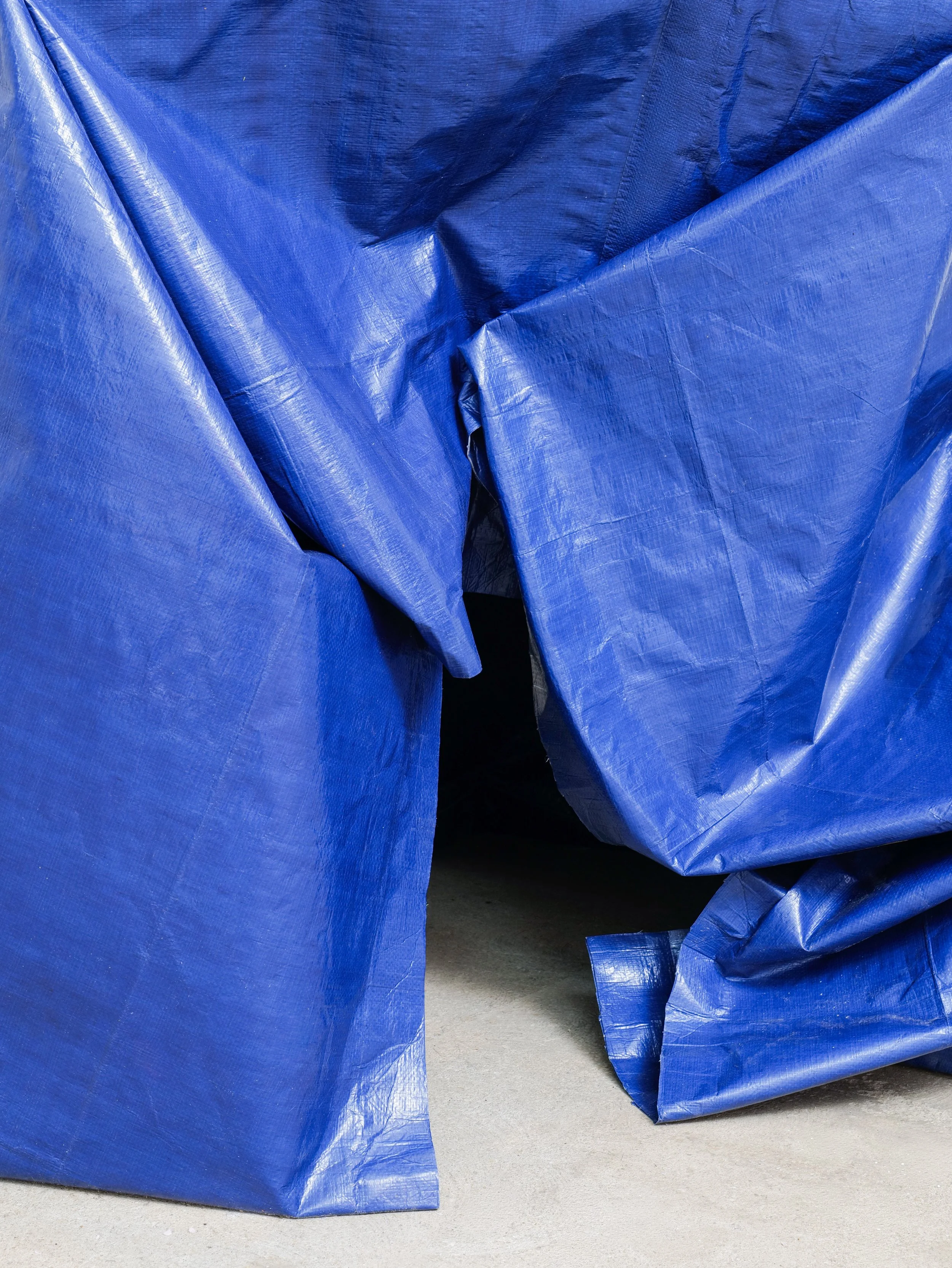
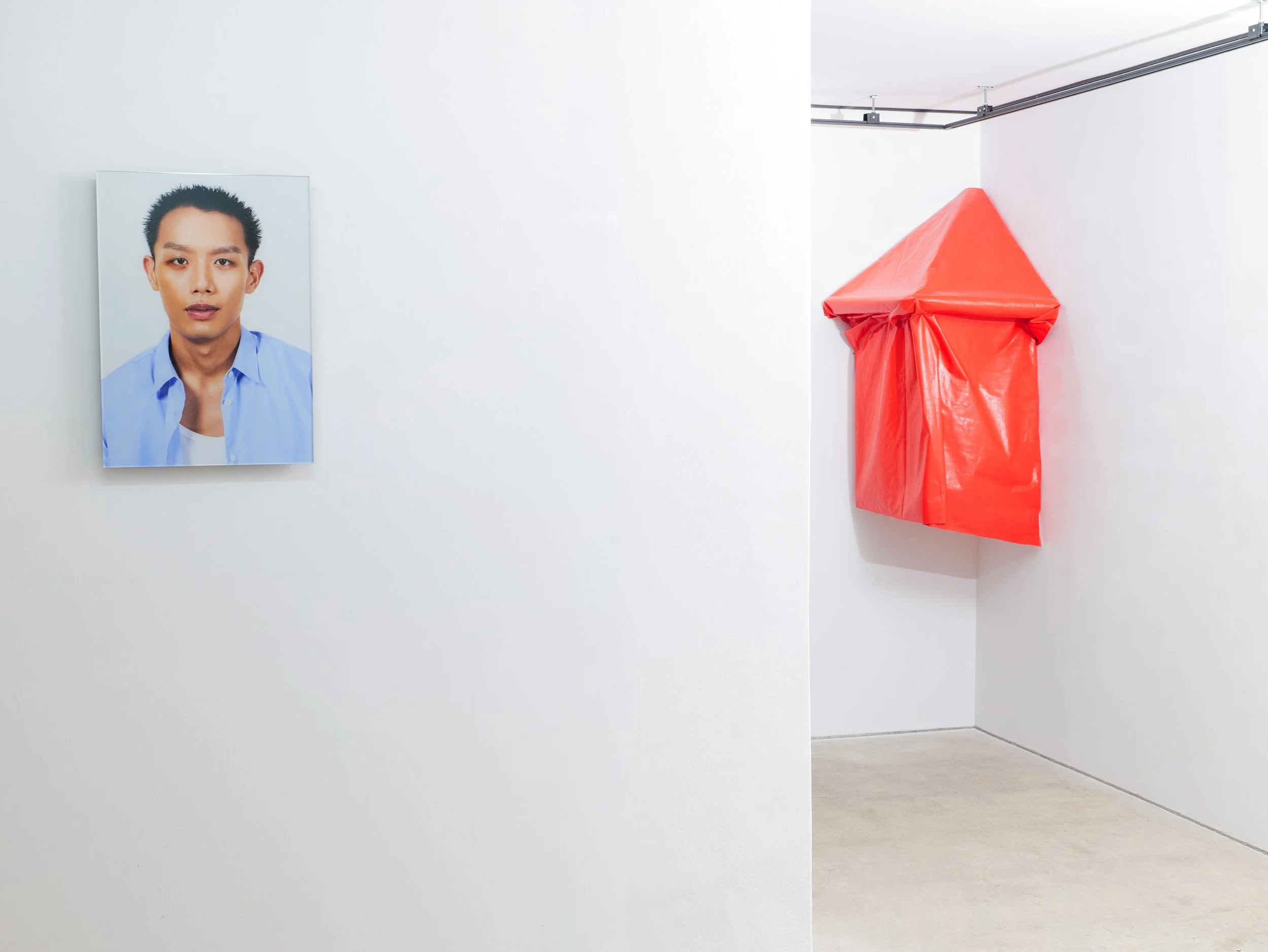
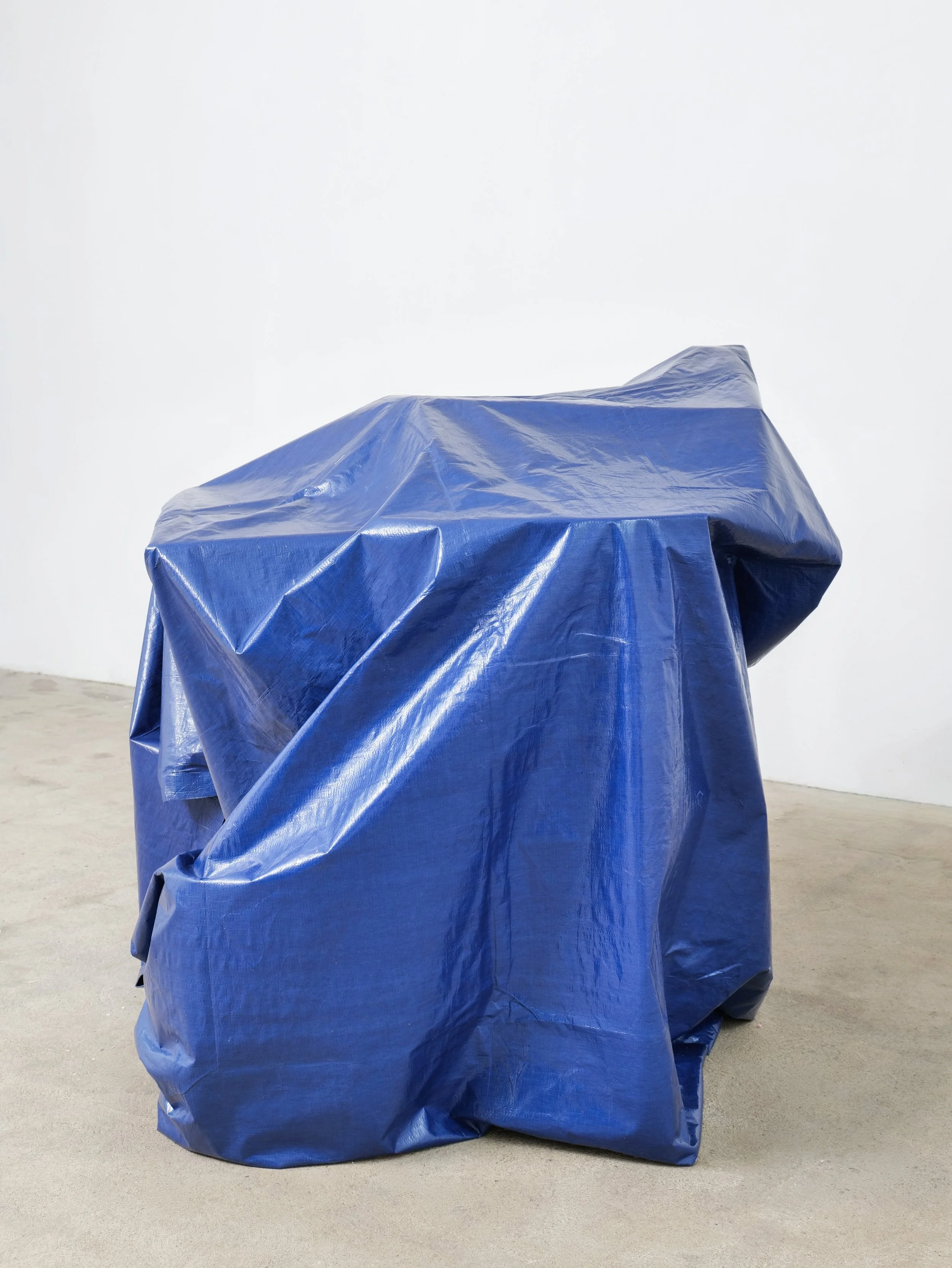
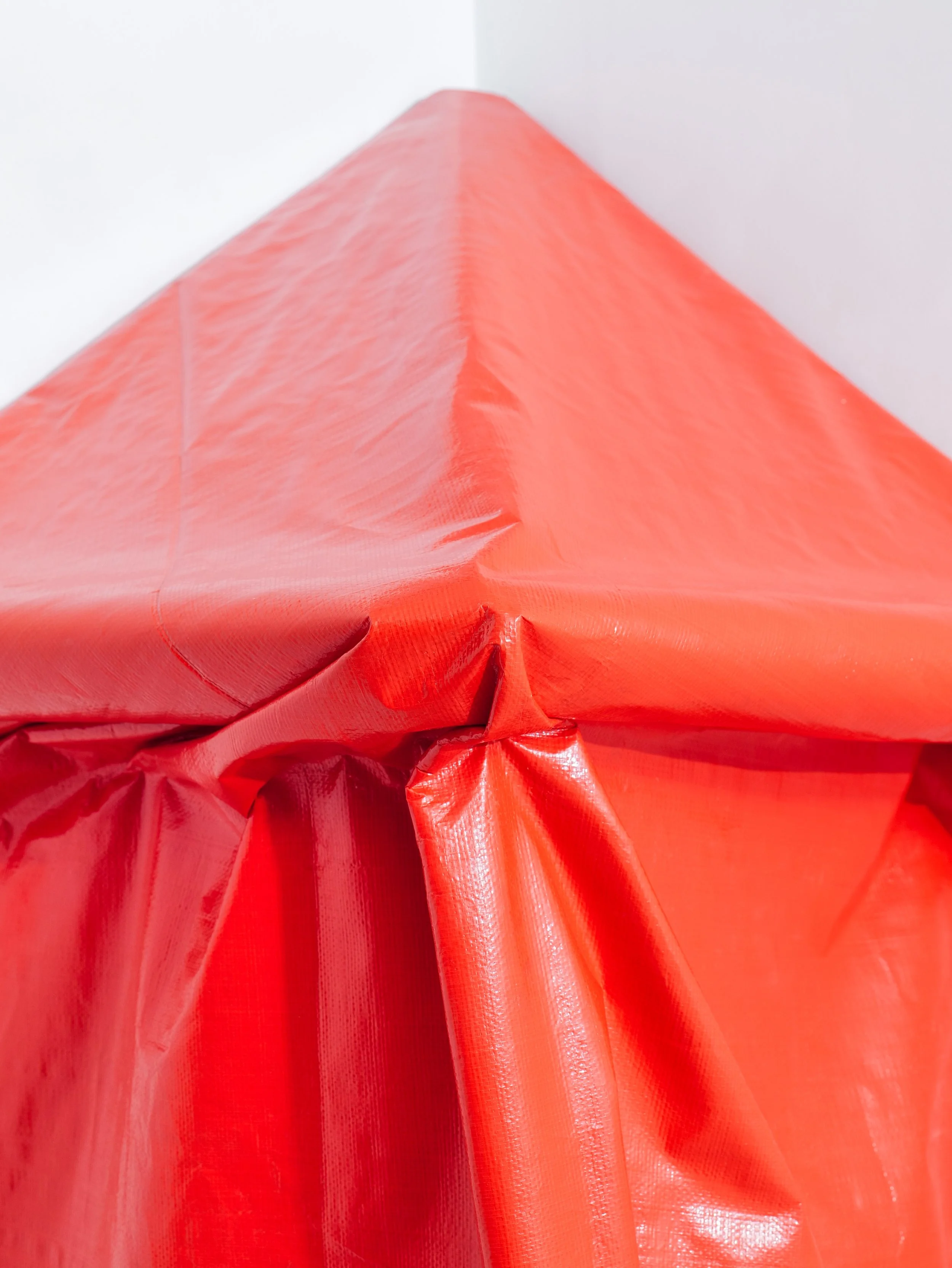
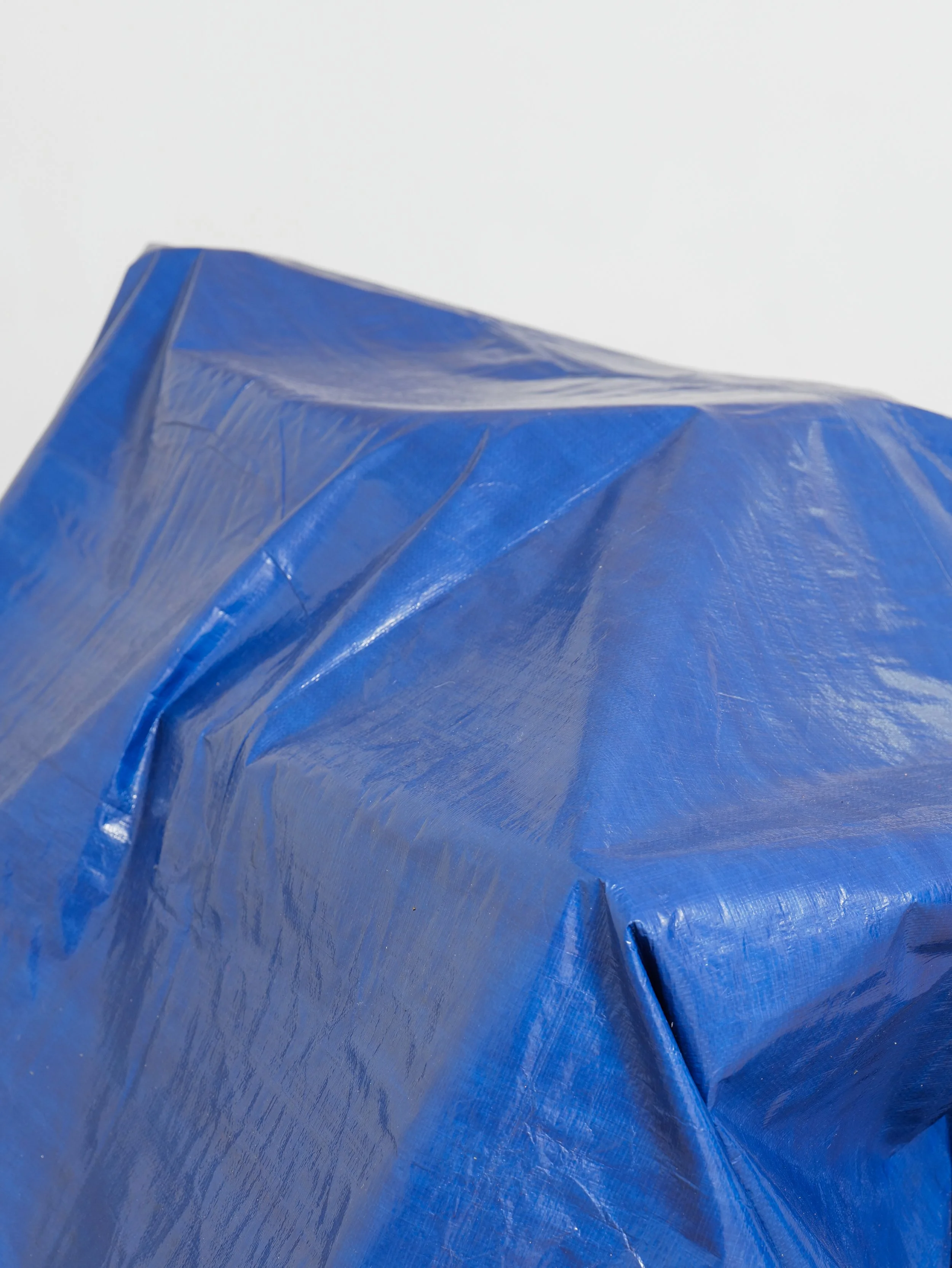
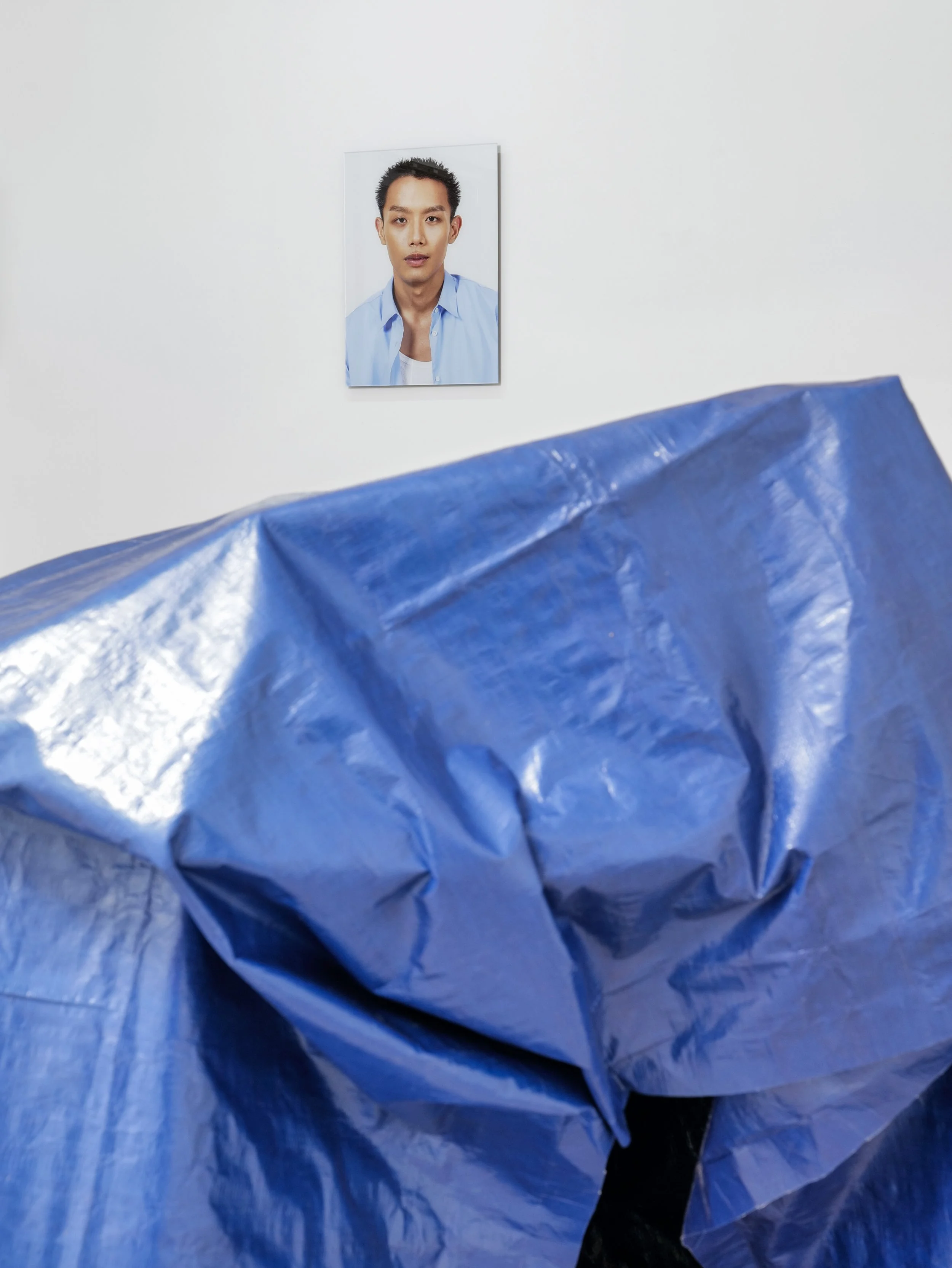
<wraps> is a body of sculptural work articulated through the language of protection and concealment. The covered forms commonly encountered in streets and construction sites are here rigidly fixed, becoming structural entities in themselves. What appears soft and provisional on the surface ceases to function as an outer layer, and is instead transformed into a form that sustains an internal void. This void should not be understood as absence, but rather as a condition of indeterminacy. These objects—whose contents remain inaccessible yet undeniably present—resemble an opaque chaos latent within the everyday.
A form resembling a covered street stall is situated within the exhibition space. While evoking a familiar urban scene, it remains suspended between sculpture and object, or even residue, resisting definitive classification. For some, it may register as an unremarkable scene; for others, it persists as an inexplicable sense of dissonance.
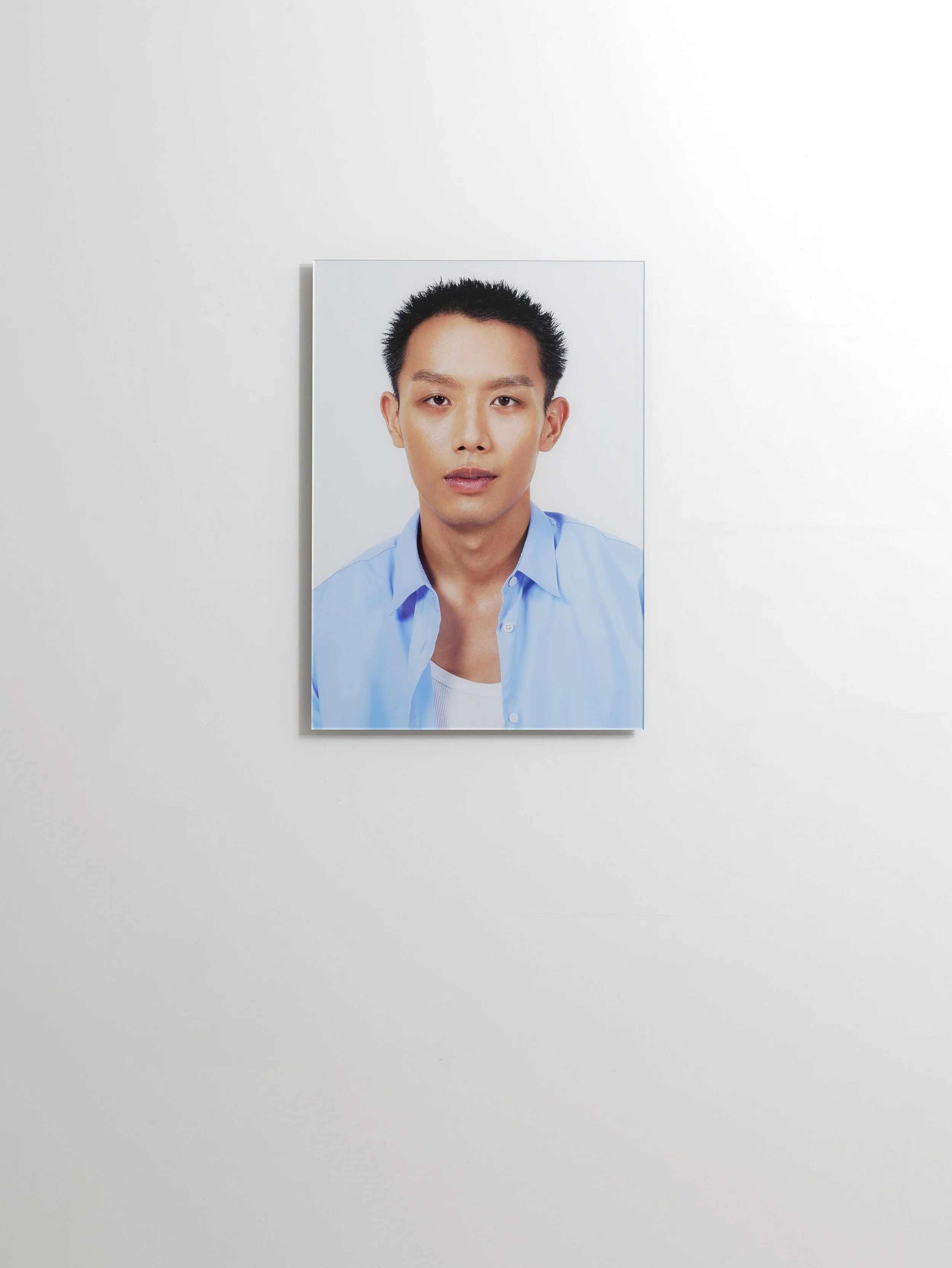
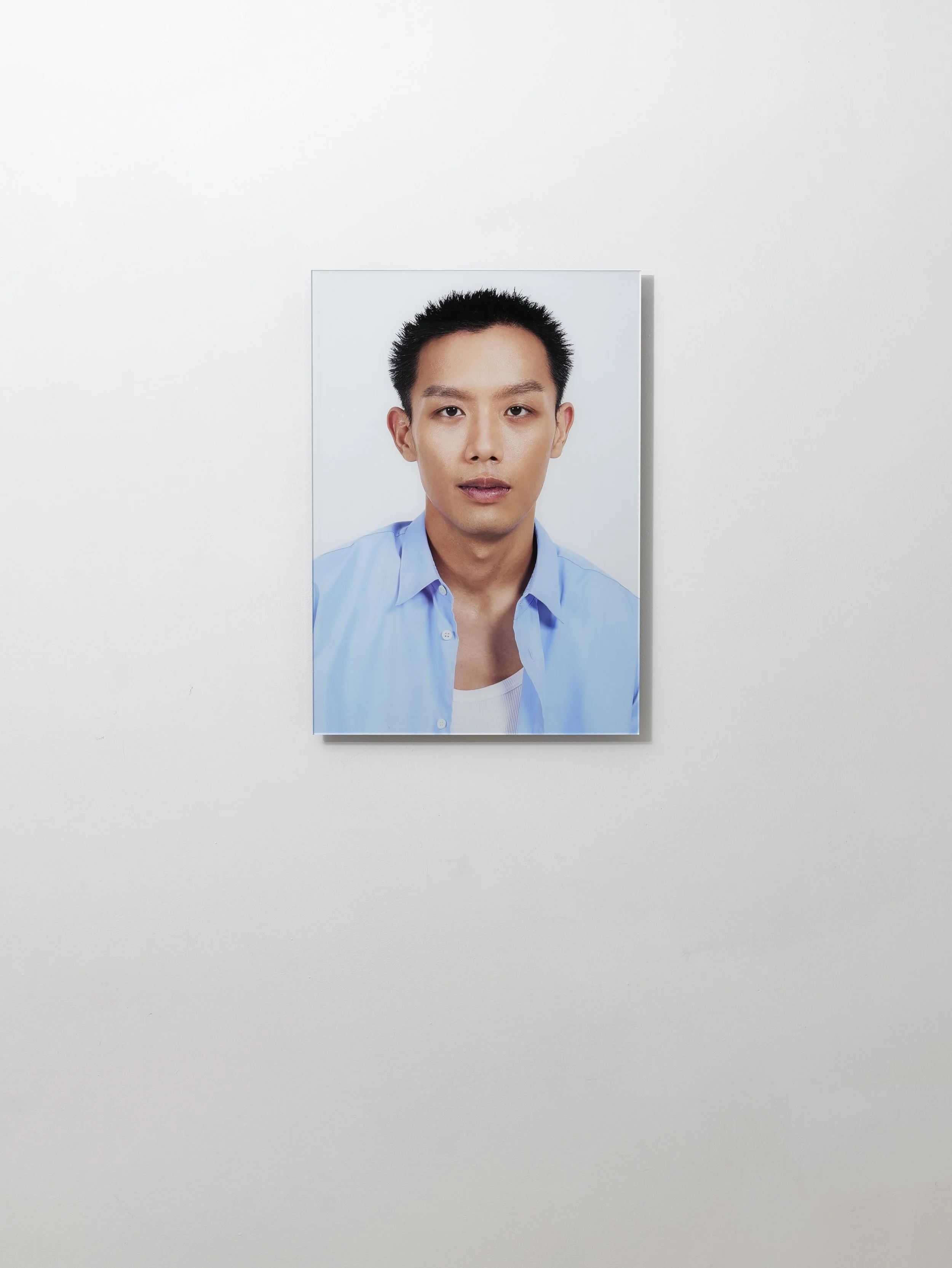
Two portraits of the same individual, positioned face to face, extend this inquiry into another register. Although photography operates as a mechanism for the objective recording of its subject, even the depicted individual cannot readily determine which image corresponds to the “correct” orientation of their face. This is due to the fact that one’s own face is never directly accessible, but is instead apprehended only through mediating images such as mirrors or photographs. As perception oscillates between the two images, what emerges is not a singular, fixed self-image, but rather a sense of the self as constituted through the totality of its representations. Through this visual structure, the work foregrounds the inherent instability of personal identity.
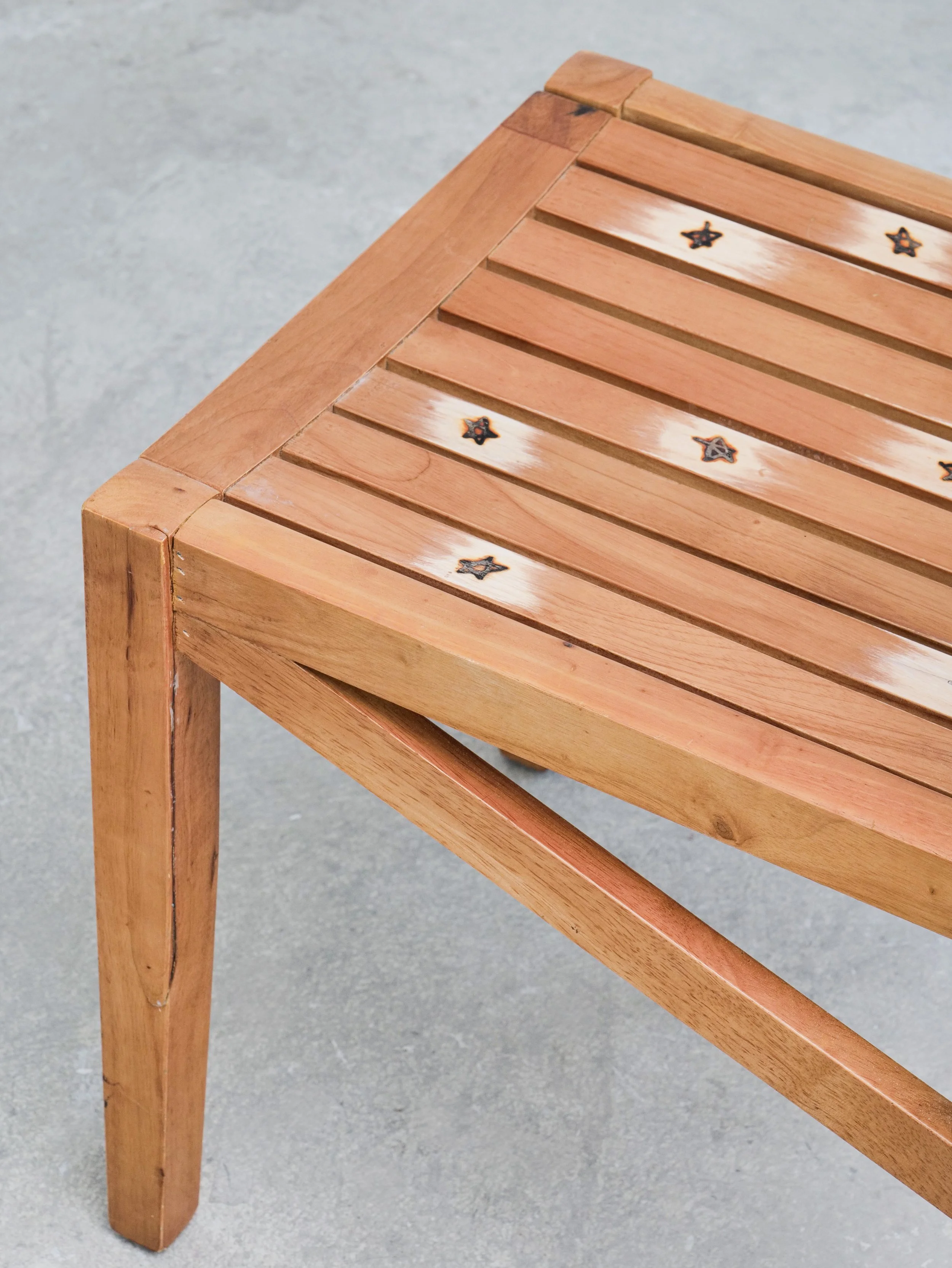
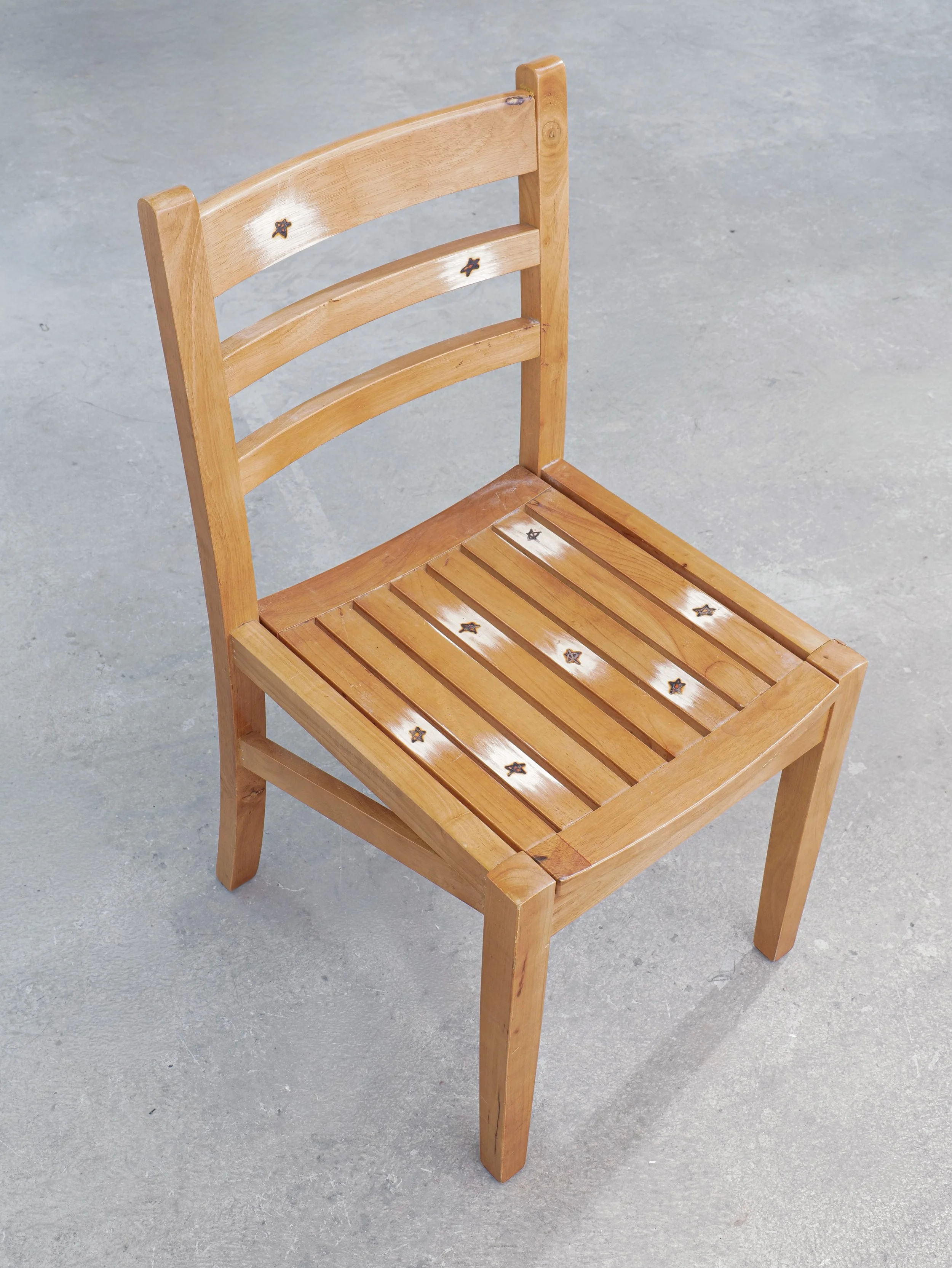
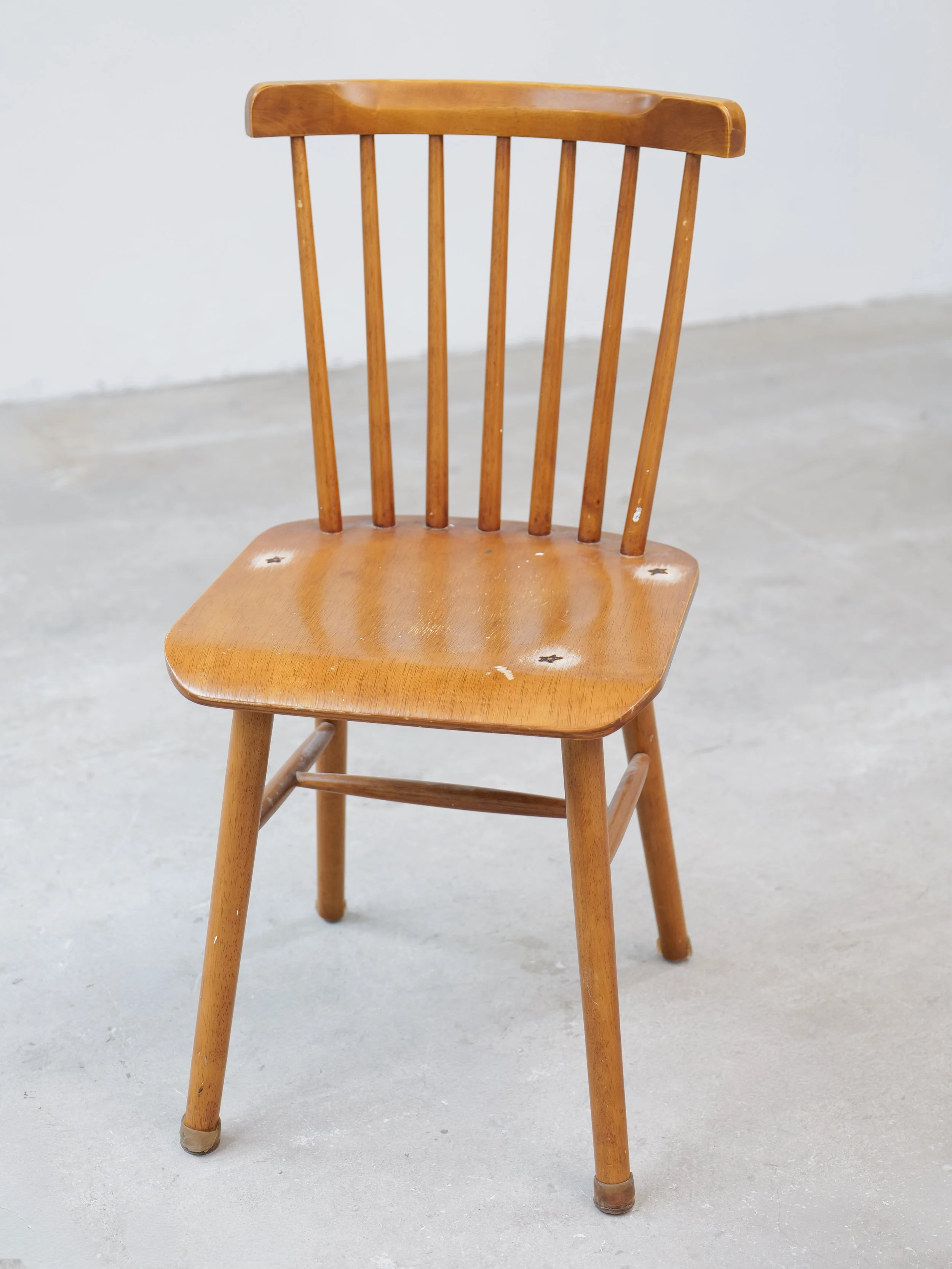
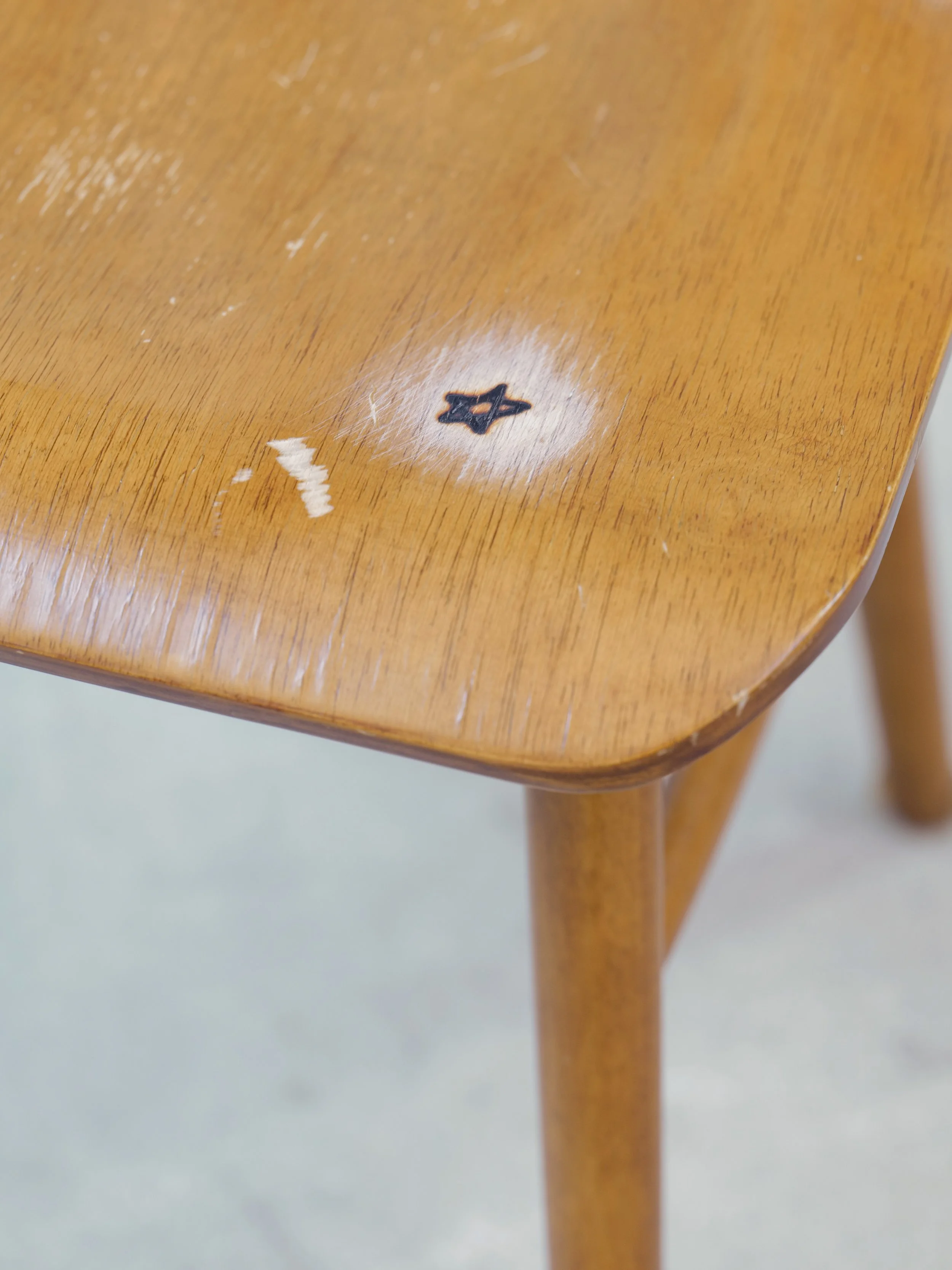
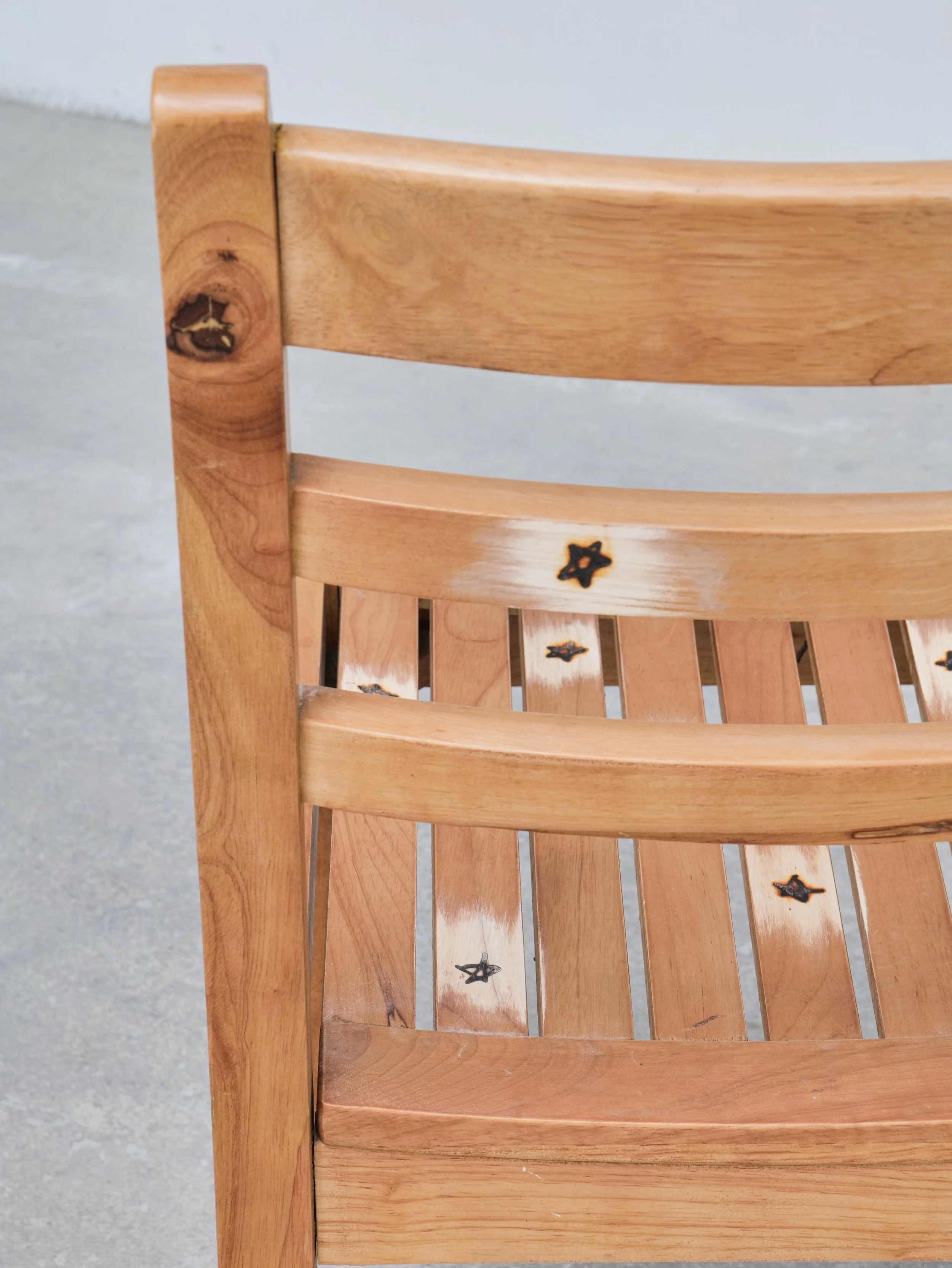
Situated in the inner space of the exhibition, ‘SV1’ articulates another dimension of the relationship between objects and the “individual.” A commercially produced wooden chair bears a star-shaped mark burned into its seat. This mark originates from a gesture made in the artist’s childhood, when a drawn star functioned to designate one chair among many as “his own.” The act of reinscribing this mark in the present operates as a reenactment of the moment in which ownership is constituted. Through this minimal intervention, a chair that could belong to anyone comes to oscillate between private possession and readymade object, between furniture and sculpture. The sense of ownership and value—fragile yet operative—thus emerges and stabilizes within the fabric of everyday life.
What, then, can be said to be seen here?
Or has something already been passed by, before it was even seen.
익숙한 것들은 쉽게 지나쳐진다.
그러나 덮인 순간, 그것은 더 이상 같은 방식으로 보이지 않는다.
후쿠시마 슈헤이의 작업은 일상에 흩어진 사물들—블루 타프, 가구, 거울—에서 출발한다. 그러나 그의 시선은 그것들을 재현하기보다, 다시 보게 만드는 방향으로 기울어 있다. 사물은 기능을 잃고, 대신 어떤 표면과 구조, 그리고 지연된 인식의 상태로 남는다. 이때 ‘개인’은 고정된 정체가 아니라, 감각과 거리 속에서 다시 구성되는 하나의 존재 방식으로 드러난다.
〈wraps〉는 보호와 은폐의 언어로 이루어진 조각들이다. 거리와 공사 현장에서 흔히 마주치는 덮인 형상들은, 여기서 단단히 고정된 채 스스로의 구조가 된다. 부드럽고 임시적인 표면은 더 이상 외피가 아니라, 내부의 공백을 지탱하는 형식으로 전환된다. 이 비어 있음은 결핍이 아니라, 알 수 없음의 상태에 가깝다. 무엇이 있는지 끝내 확인할 수 없는 대상, 그러나 분명히 존재하는 덩어리. 그것은 일상 속에 잠재된 불투명한 카오스와 닮아 있다.
포장마차를 덮어놓은 듯한 형상은 전시장 가운데에 놓이며, 익숙한 도시의 장면을 닮은 채 조각과 사물, 혹은 잔여의 상태 사이에서 끝내 규정되지 않는다. 어떤 이에게는 아무 일도 아닌 장면이, 다른 이에게는 설명되지 않는 위화감으로 남는다.
서로를 마주보고 있는 두 장의 인물 사진 이 문제를 또 다른 층위에서 드러낸다. 사진은 대상을 객관적으로 기록하는 장치로 기능하지만, 정작 그 이미지 속 인물조차 어느 쪽이 자신의 얼굴의 ‘올바른’ 방향인지 즉각적으로 판단하지 못한다. 우리는 자신의 얼굴을 직접 볼 수 없고, 거울이나 사진과 같은 매개를 통해서만 그것을 인식하기 때문이다. 두 이미지 사이에서 지각이 오가는 순간, 드러나는 것은 하나의 고정된 자기상이 아니라, 그러한 표상들의 총체로서의 자기 ‘감각’이다. 사진이 만들어내는 시각적 구조를 통해, 이 작업은 개인의 동일성이 얼마나 불안정한 것인지를 드러낸다.
전시장 안쪽에서 마주하게 되는 ‘SV1’은 또 다른 방식으로 사물과 ‘개인’의 관계를 드러낸다. 상업적으로 생산된 나무 의자의 좌판에는 별 모양의 흔적이 불로 새겨져 있다. 이 표식은 어린 시절, 여러 개의 의자 가운데 하나를 ‘자신의 것’으로 구분하기 위해 작가가 그렸던 별에서 비롯된 것이다. 현재의 시점에서 그것을 다시 불로 각인하는 행위는, 소유가 발생하는 순간을 되짚는 하나의 재연에 가깝다. 이 최소한의 기호를 통해, 누구의 것이라도 될 수 있었던 의자는 사적인 소유와 기성품 사이, 가구와 조각 사이를 미세하게 오간다. 연약한듯 보이지만 분명하게 작동하는 소유와 가치의 감각은 그렇게 일상 속에서 조용히 발생하고 또 고정된다.
당신은 그 앞에서, 무엇을 보고 있다고 말할 수 있을까.
혹은 아직 보지 못한 채, 이미 지나치고 있는 것은 아닐지.