<No Country for Old Men>
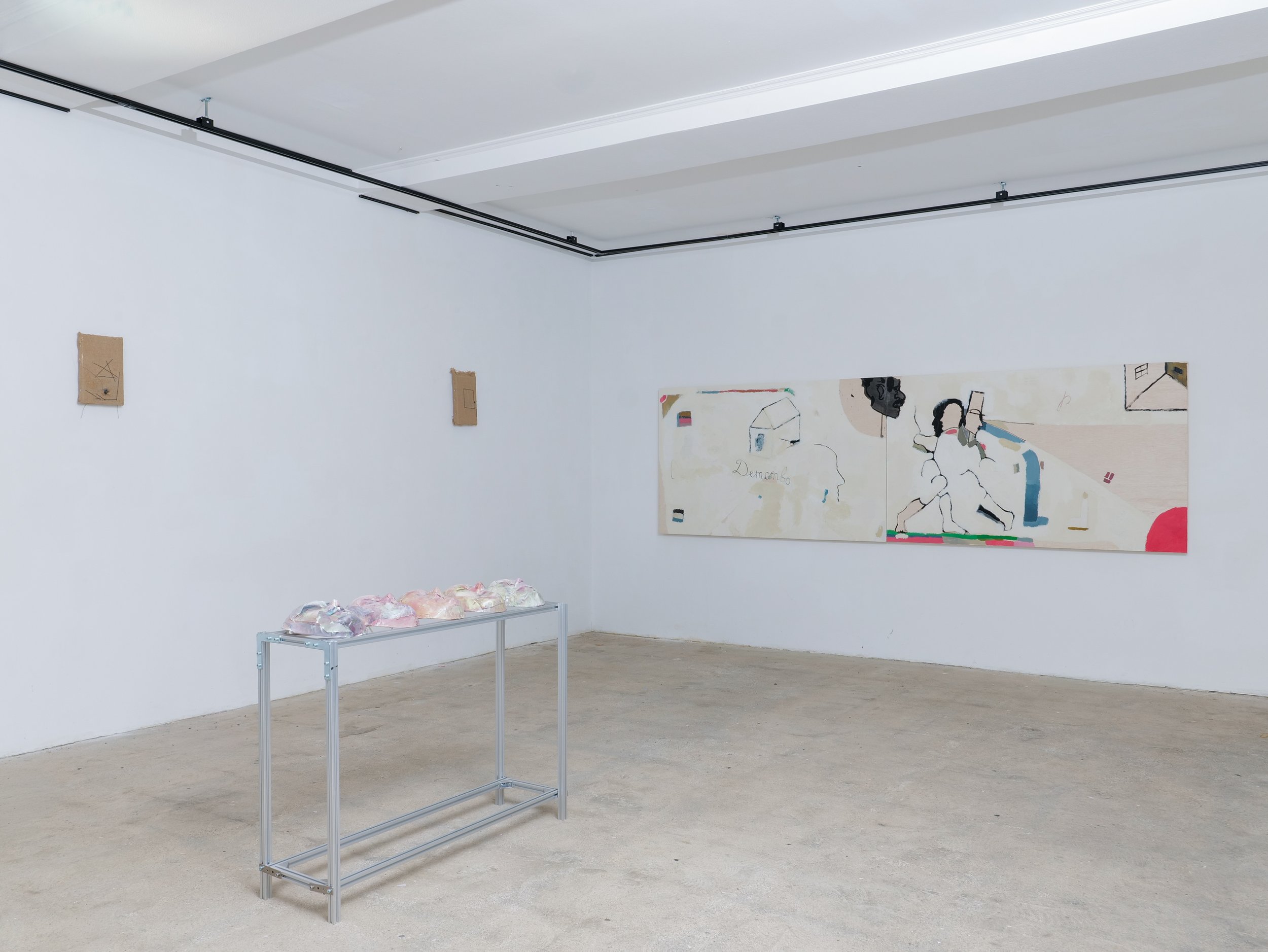
Duo exhibition by Chevvon Yoon & Egor Lvovich.
2026.01.31 - 2026.02.14
In our present moment, the notion of belonging disguises itself in countless terms and concepts, and in doing so approaches us with a certain indifference. Upon this indifference, what kind of house can we possibly build? How do we construct the frame within which the mind may come to rest?
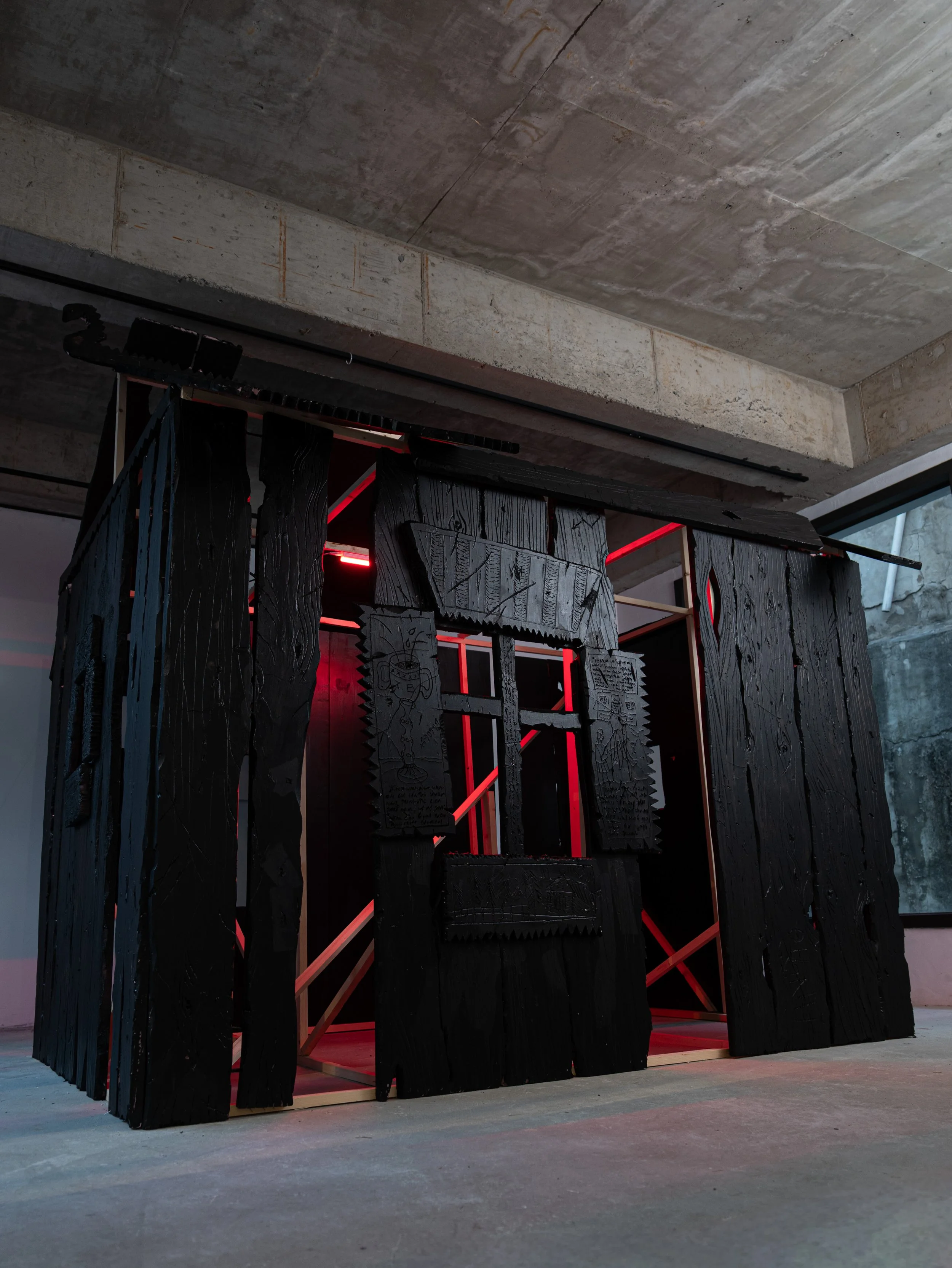
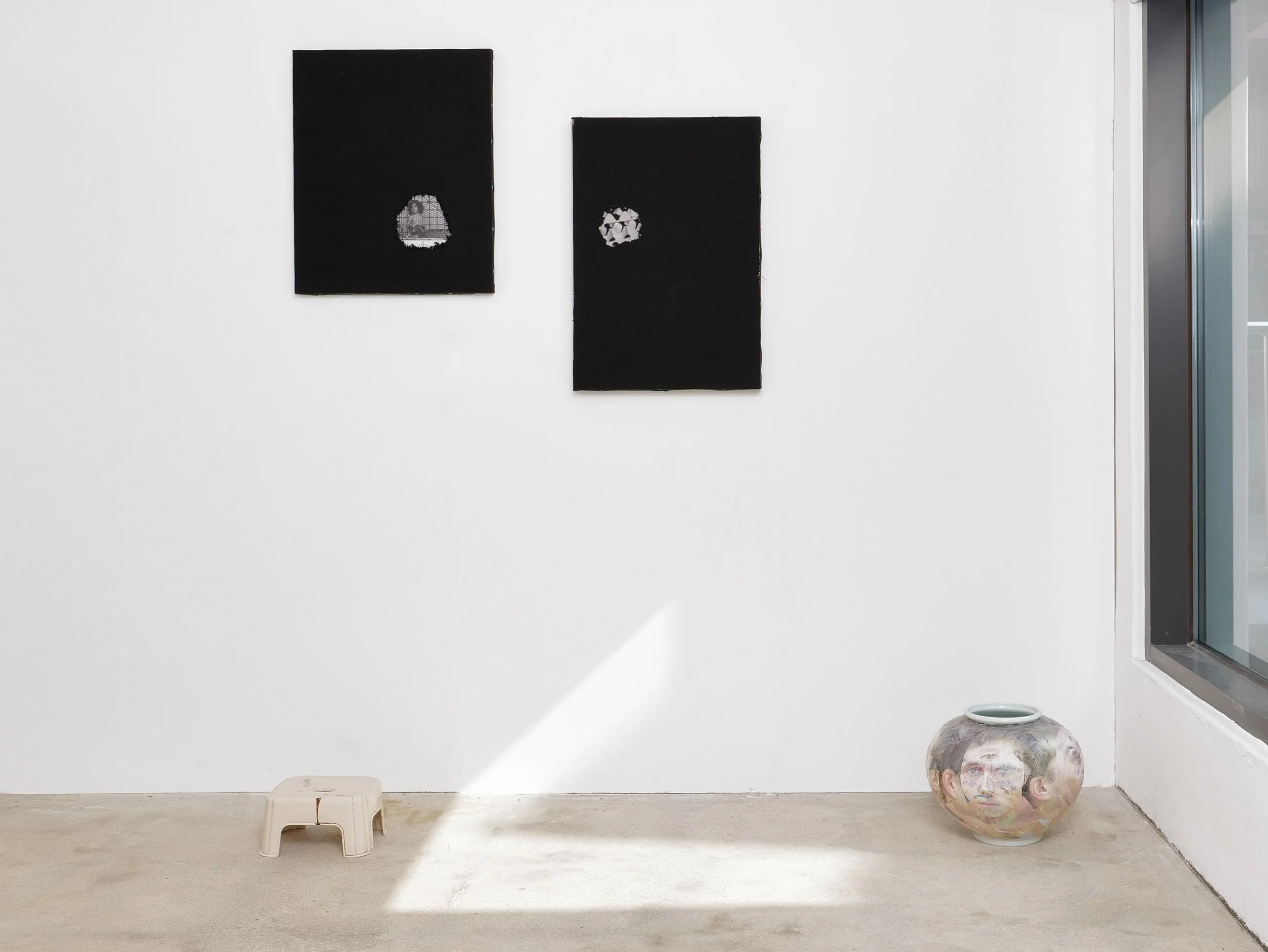
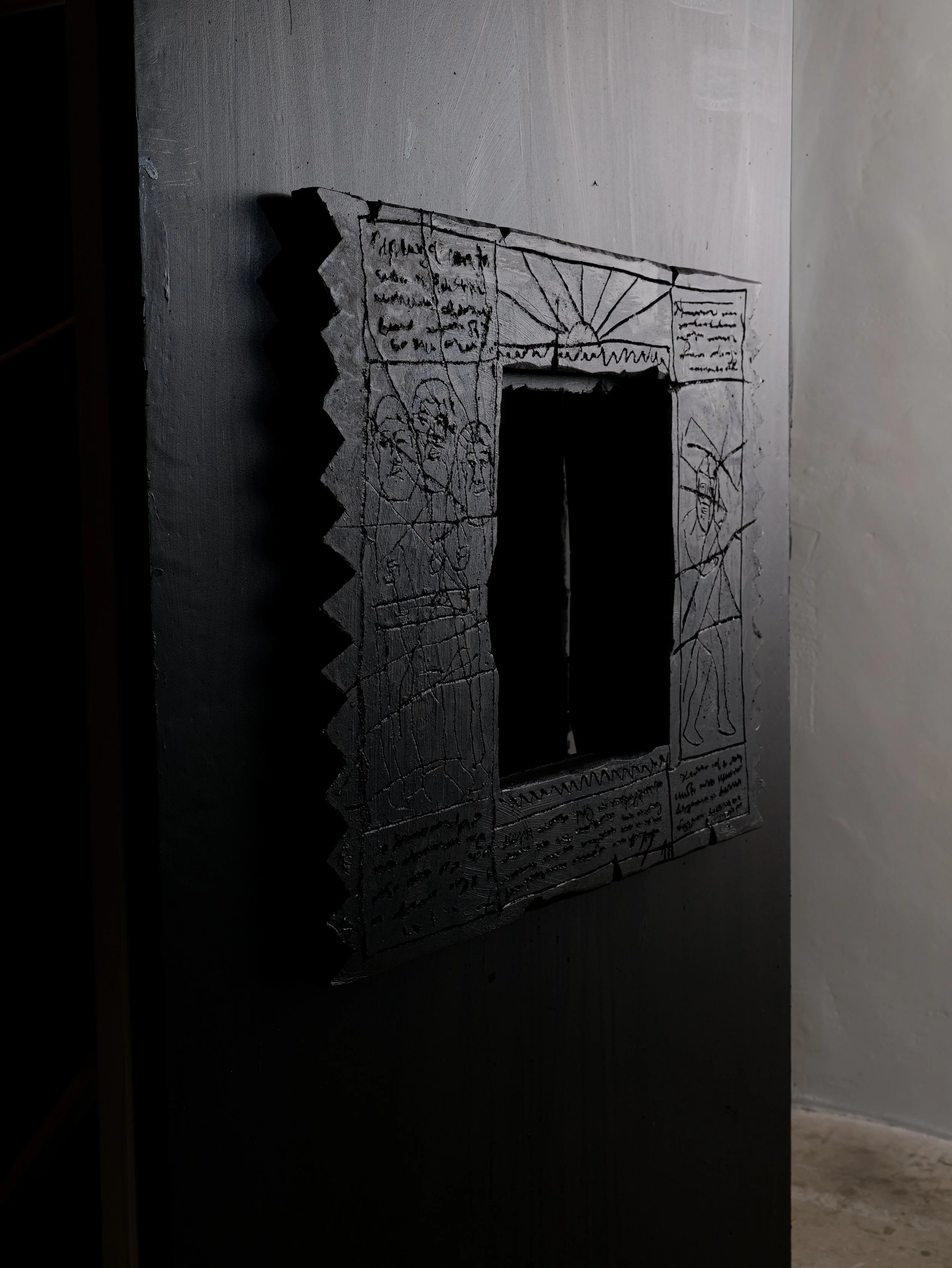
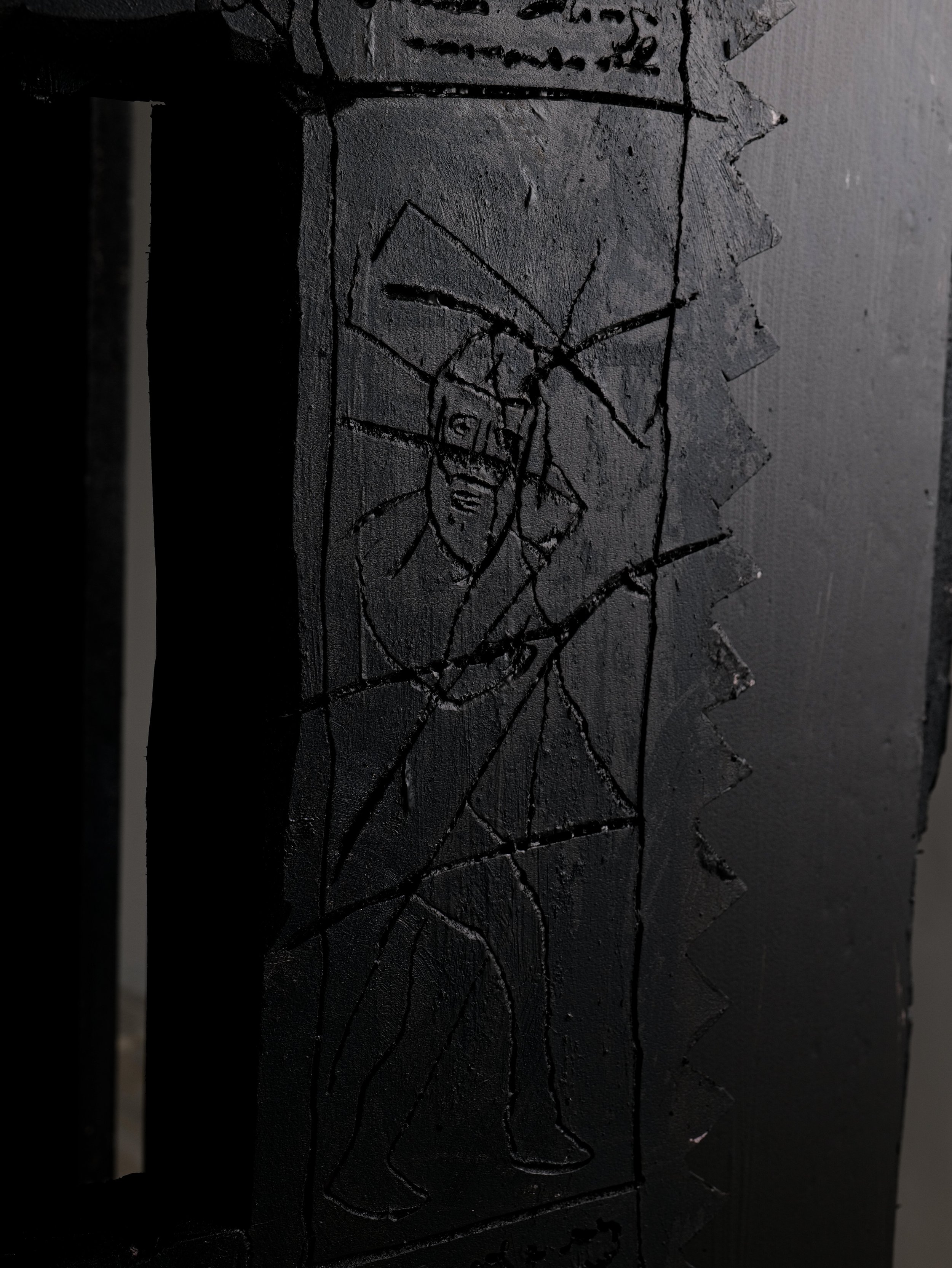
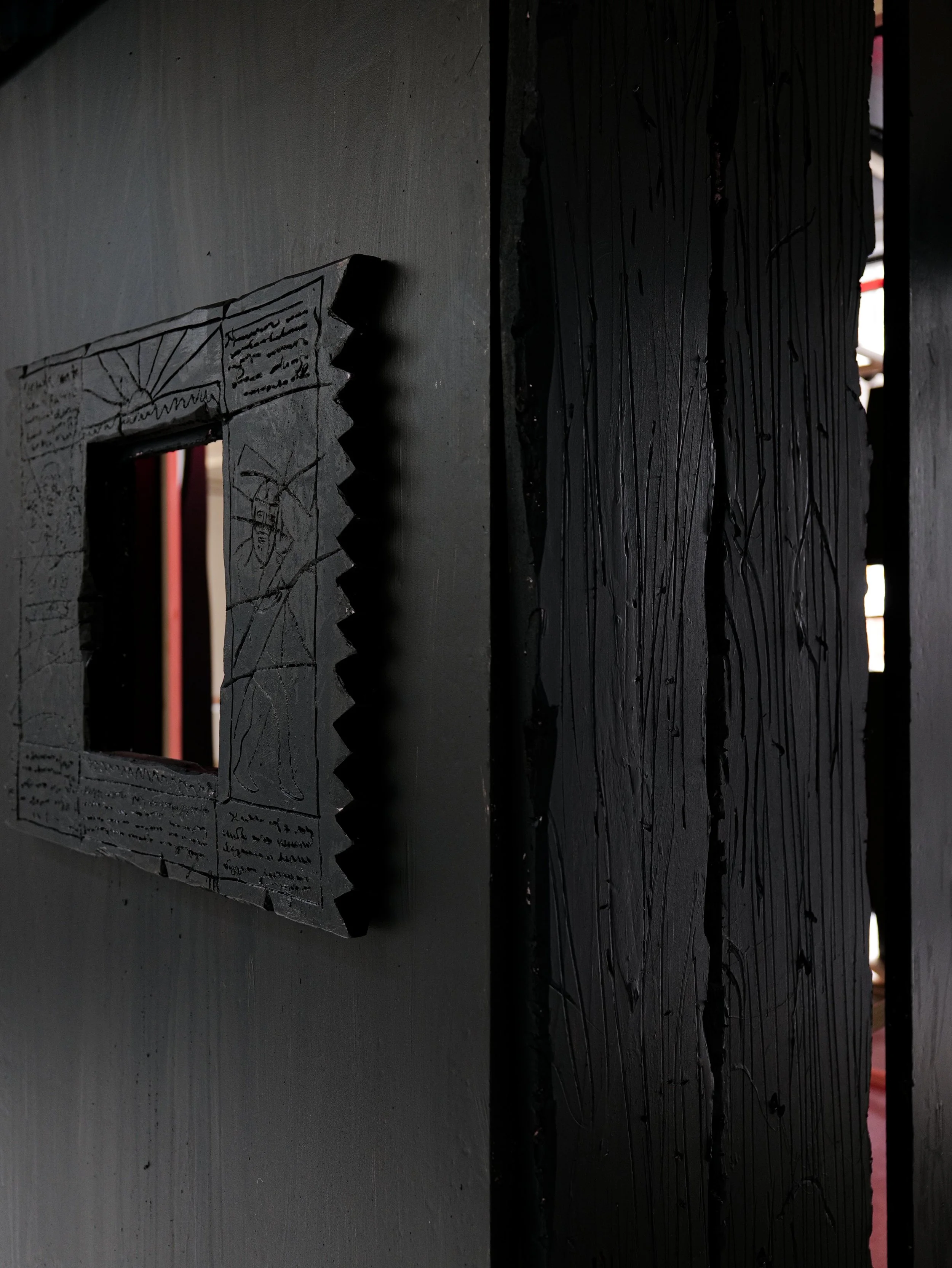
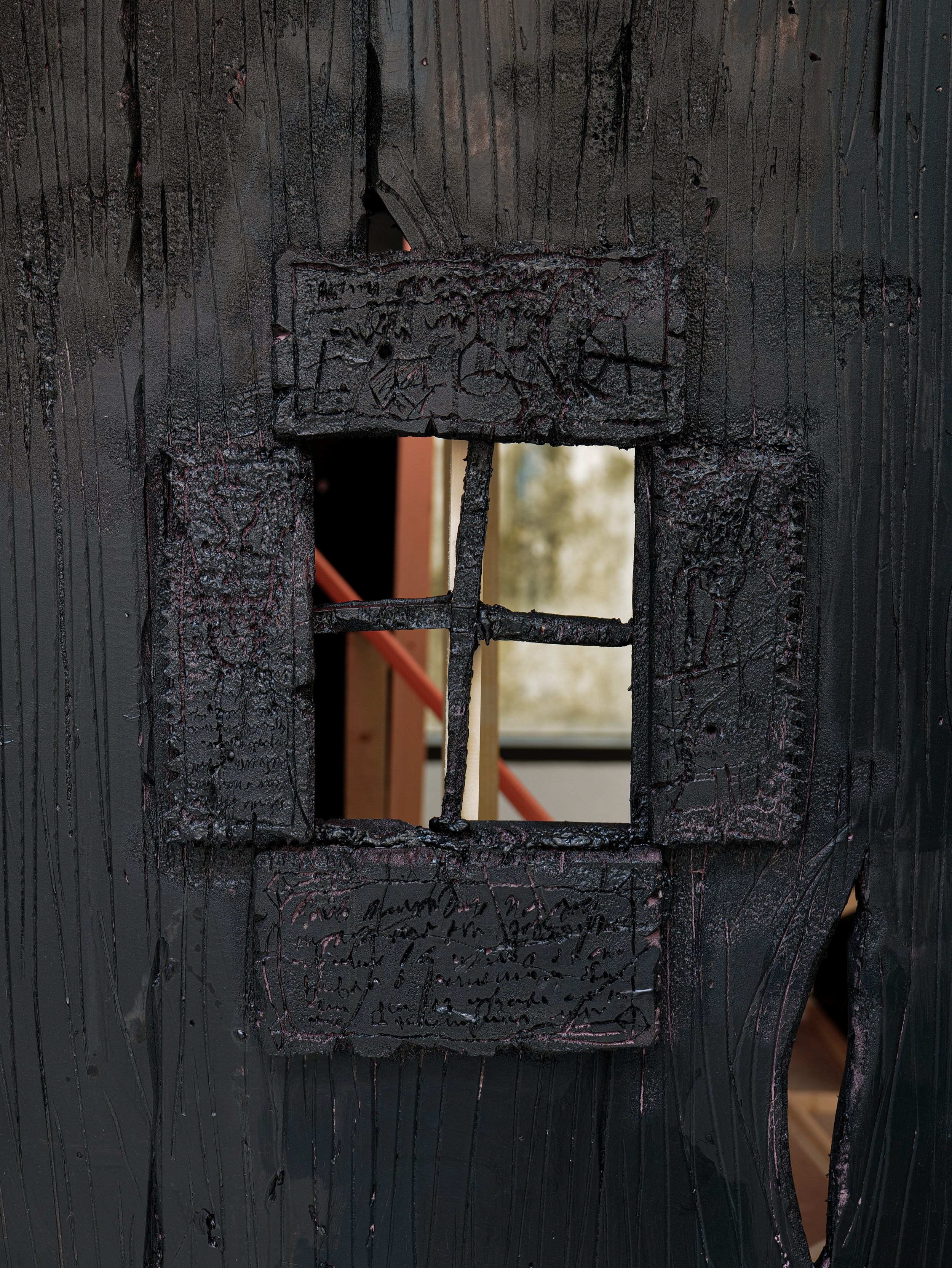
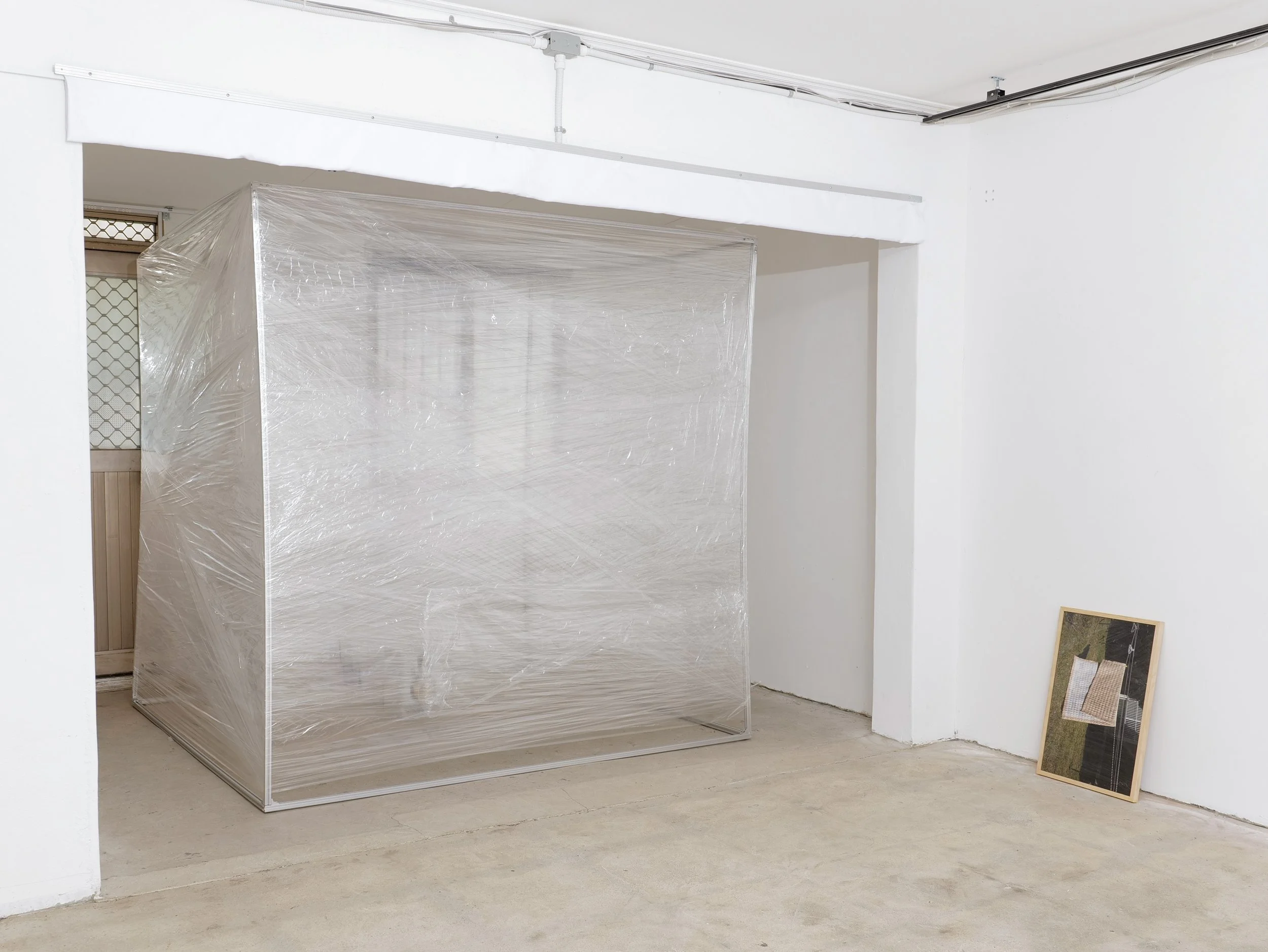
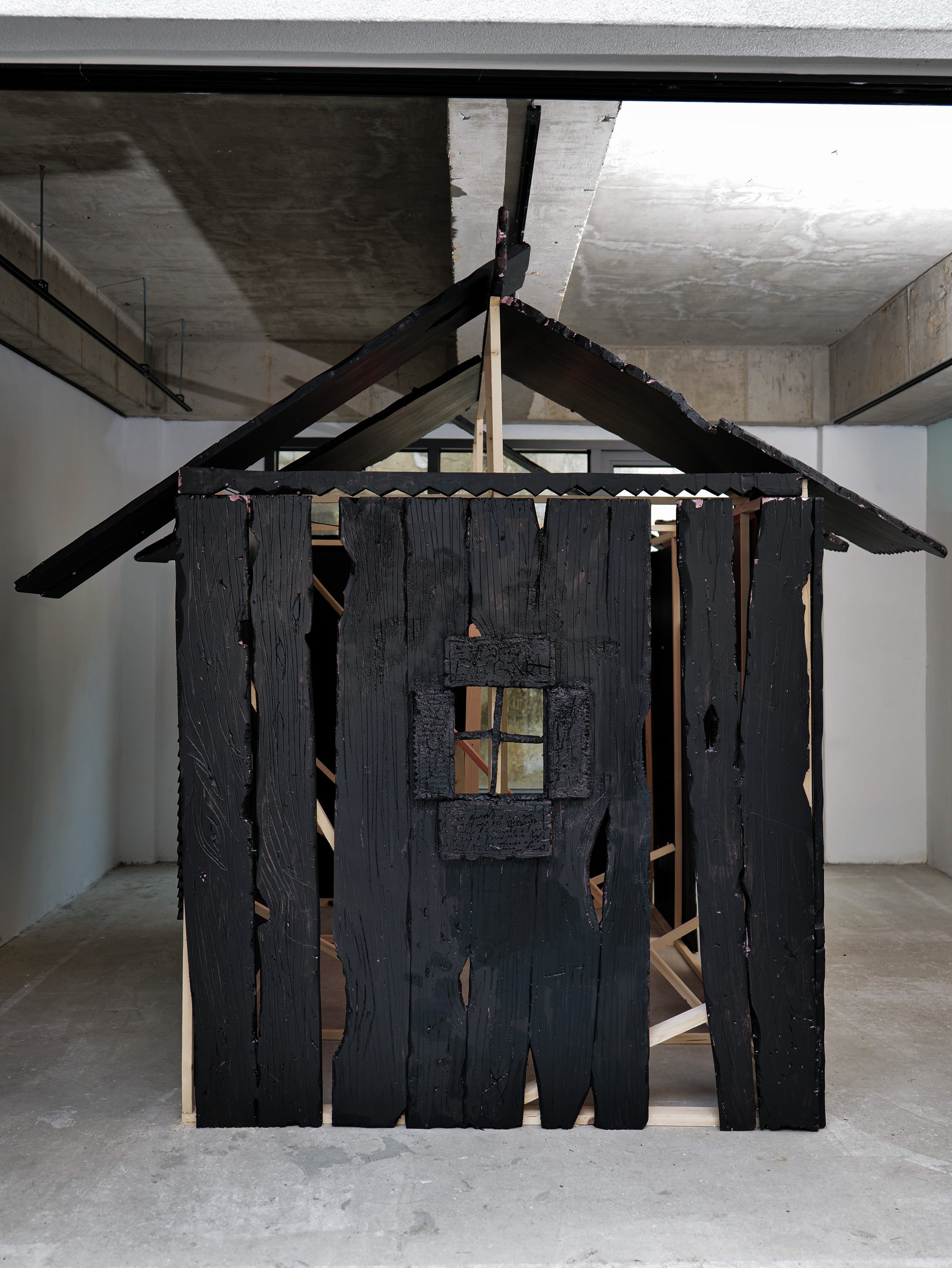
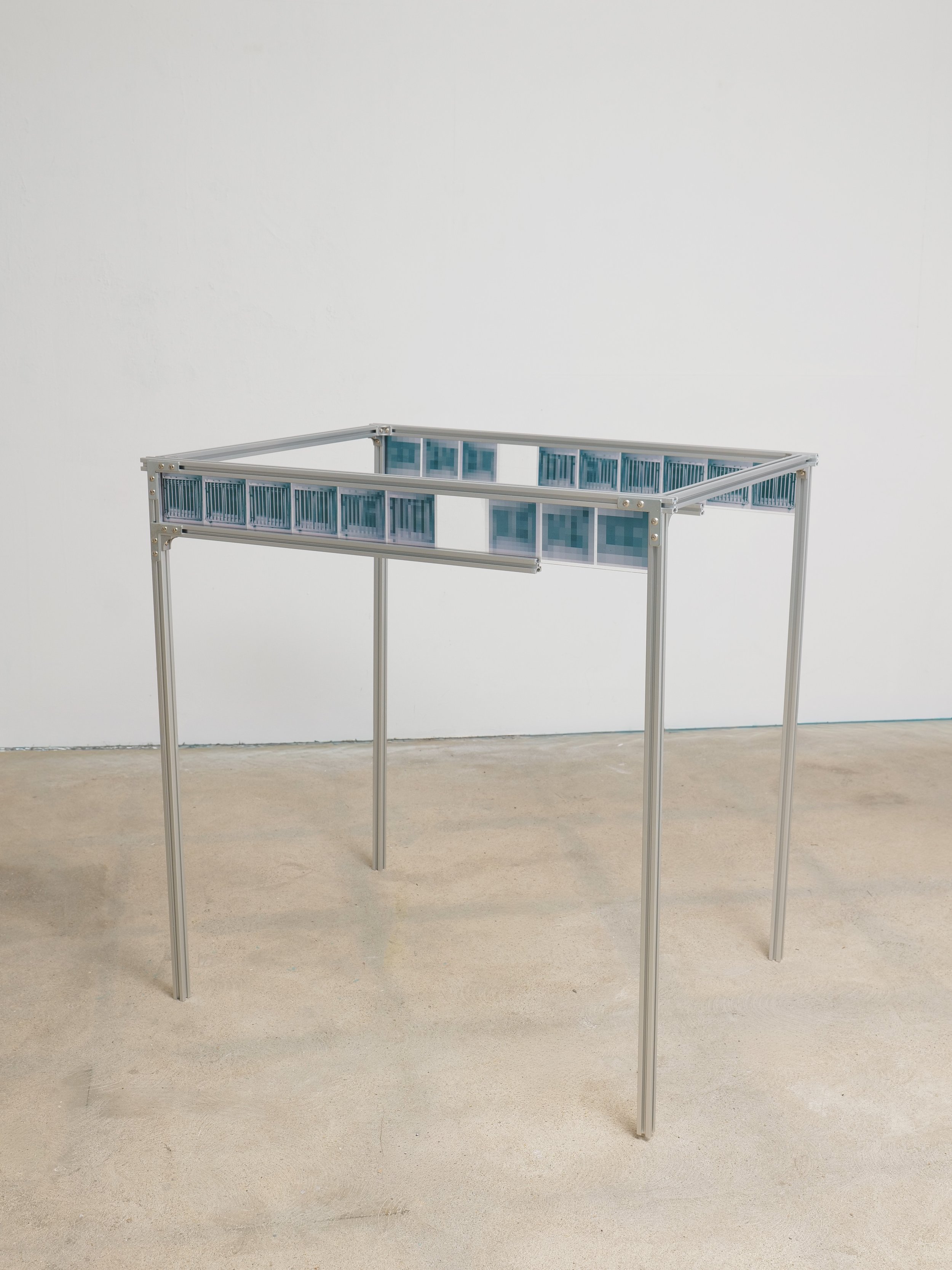
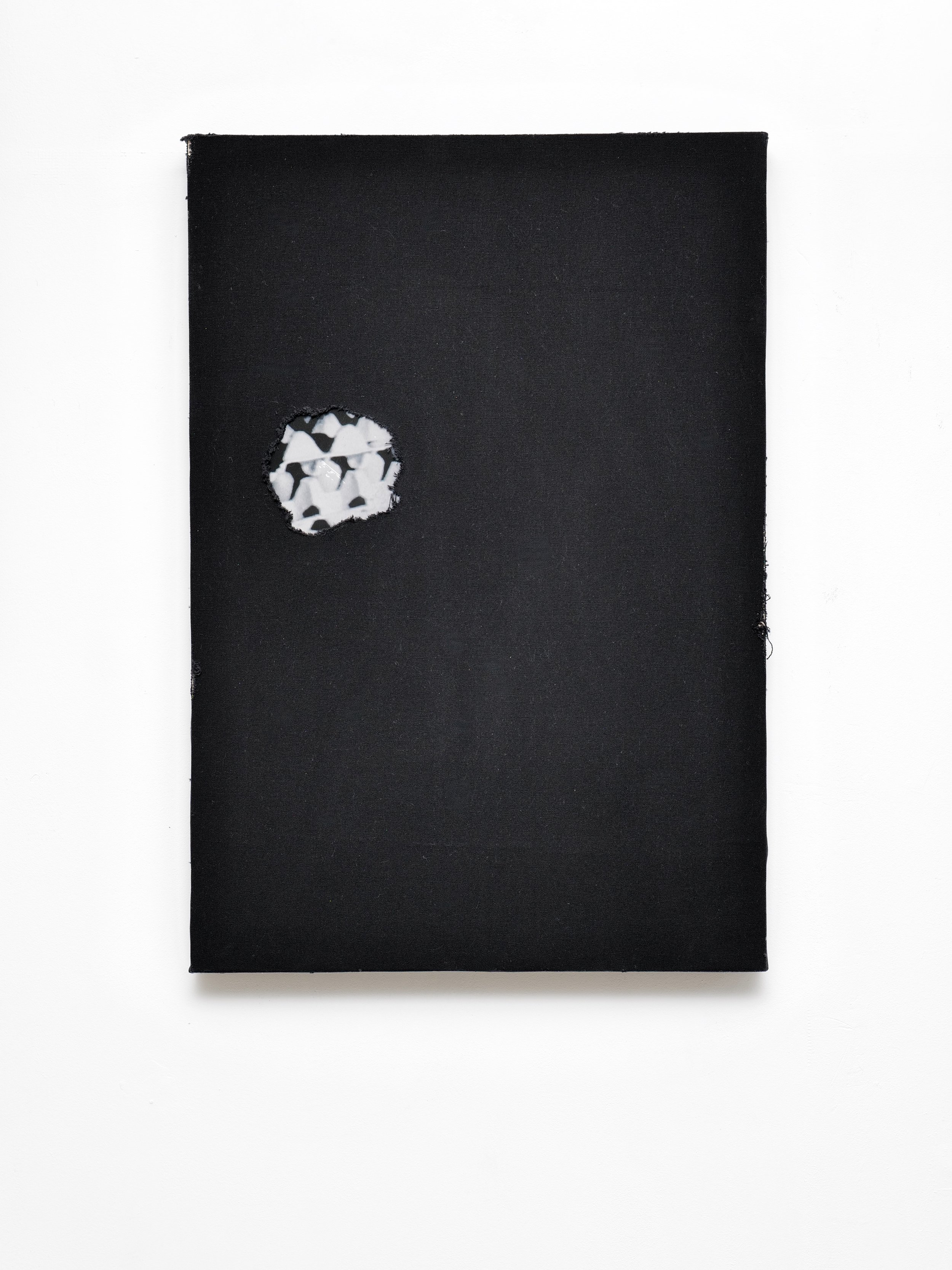
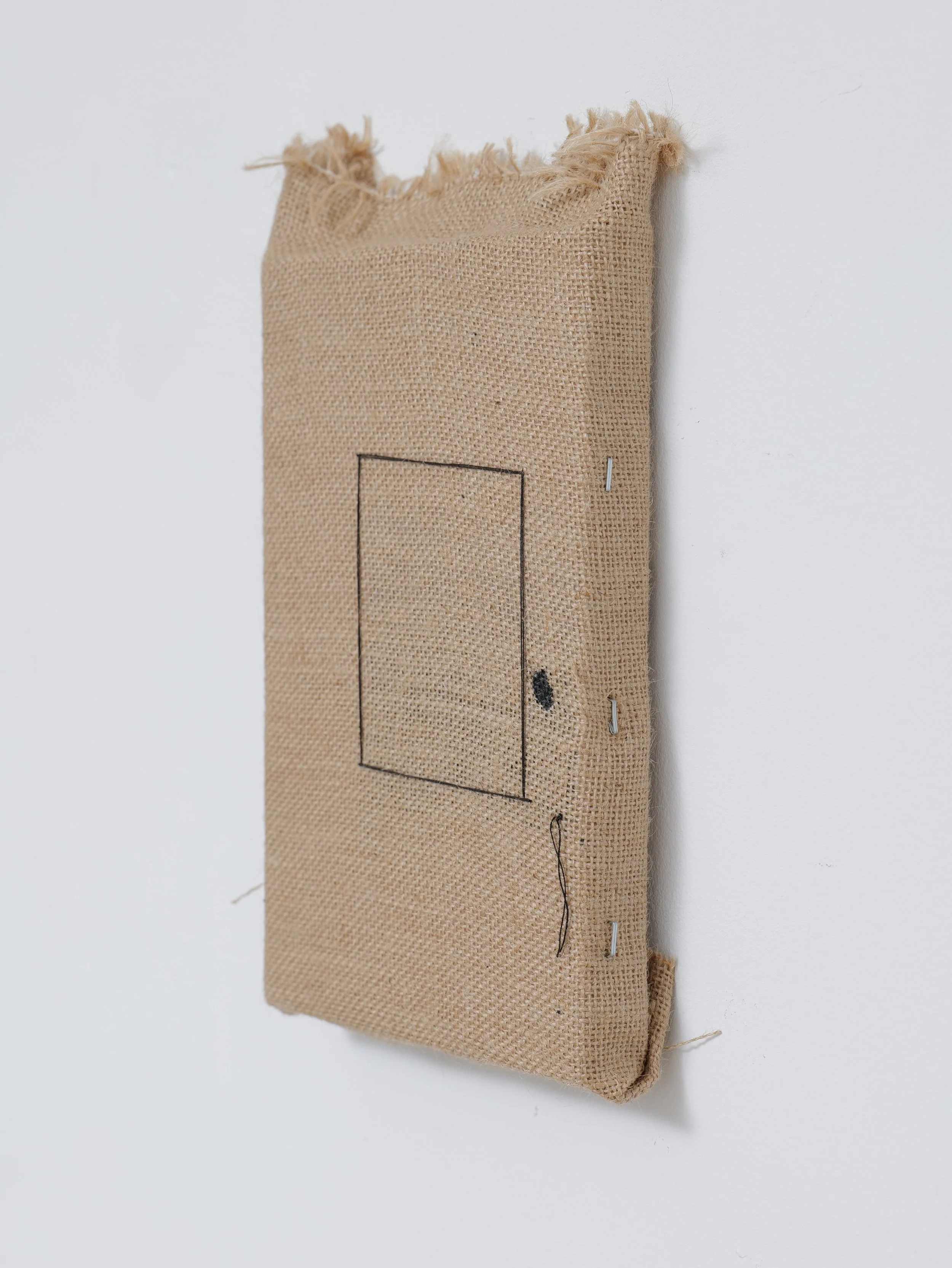
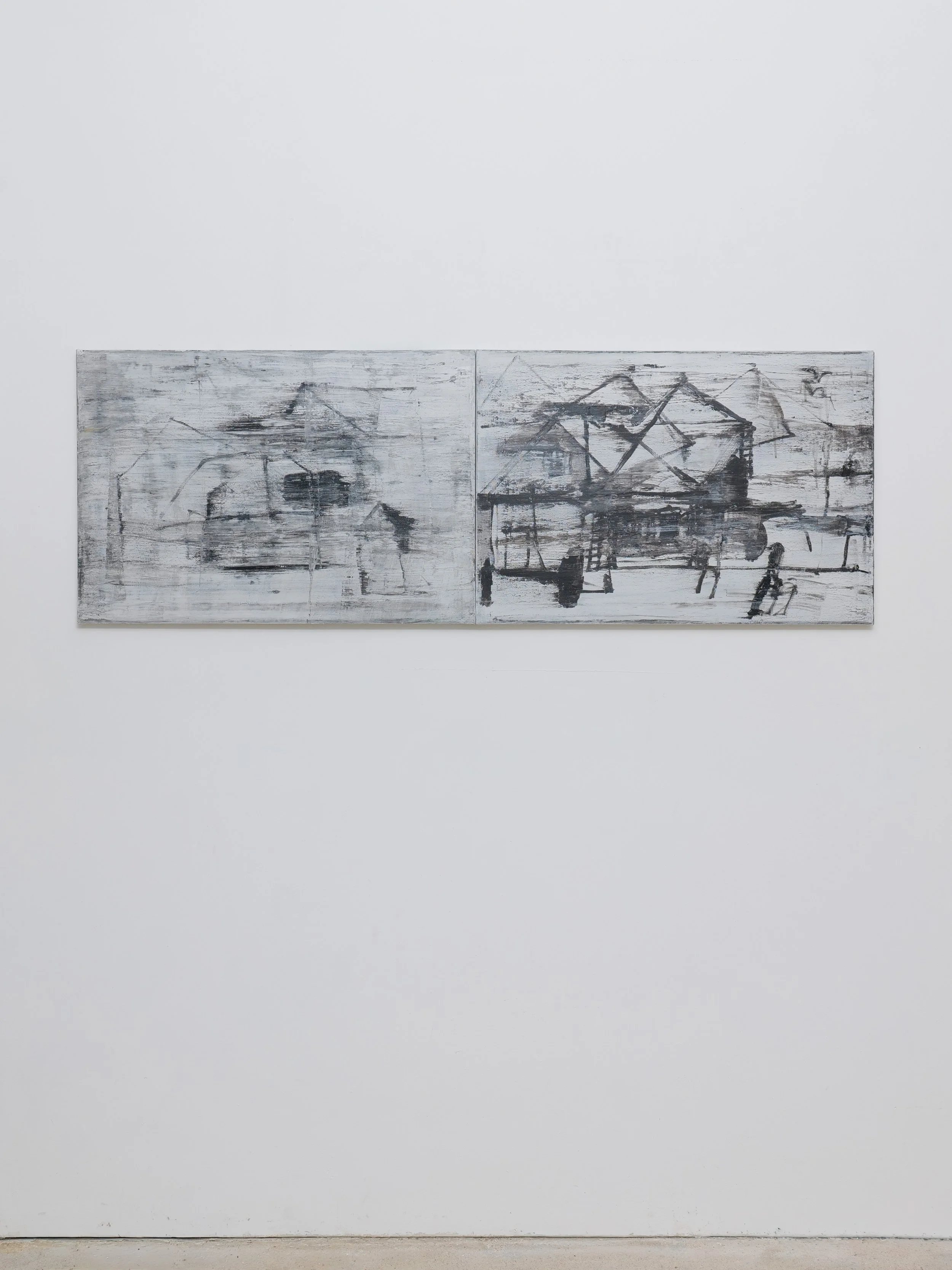
On the first floor, a structure emerges accompanied by a desolate sound. Though it clearly assumes the form of a house, it appears to have lost the function of dwelling. One cannot tell whether it feels unstable because it was hastily assembled, or because it has endured too long and now stands on the verge of collapse. Meanwhile, on the second floor, a translucent structure awaits. It does not resemble a house in shape, yet sensorially it evokes the function of one. A table, a stepping stool, and the image of a refrigerator stacked with eggs—positioned within the same space—seem to stand in fragmentarily for the symbolic elements of home.
Yet the sensations that continuously press in—most notably the everyday sounds looping within the translucent membrane—while clearly intended as emblematic of domestic harmony, feel excessively imposed. They approach like memories compulsively edited, like trauma insistently replayed. Moving between the first and second floors, between house and Home, a low murmur lingers.
Where is the home meant for us?
Jaewon Shin.
현시대에서 소속감이라는 말은 다양한 용어와 개념으로 둔갑하고, 그런만큼 야속하게 다가온다. 이 무정함 위에 우리는 어떤 집을 만들 수 있을까. 우리의 마음을 정주시킬 테두리는 어떻게 세워지는 것일까.
전시장 1층에서 스산한 소리와 함께 모습을 드러내는 구조물은 분명 집의 형태를 띄고 있음에도 거주의 기능을 상실한 것처럼 보인다. 급조된 탓에 불안정한 것인지, 아니면 오랜 시간을 버티다 허물어지는 것인지 알 수 없게 된다. 한편 2층에서 마주할 수 있는 반투명한 구조물은 집의 형태를 갖추고 있지 않음에도 감각적인 측면에서 집의 기능을 연상시킨다. 같은 공간에 배치된 탁자와 발돋움대, 계란이 쌓인 냉장고 이미지 역시 집의 상징적 요소를 파편적으로 갈음하고 있는 것처럼 보인다.
하지만 끊임없이 밀려오는 감각들, 특히 반투명한 막 속에서 반복 재생되고 있는 일상적인 소리는 분명 화목한 가정에 대한 상징적 사운드로 의도되지만 지나치게 강제적이다. 마치 과거의 기억이 강박적으로 편집된 트라우마처럼 다가온다. 1층과 2층을 오가며, House와 Home을 오가며 나지막이 신음한다.
우리를 위한 집은 어디에 있는가.
글 신재원